
Emotions Activities for Preschoolers - The Ones That Actually Work In Case A Kid Is Already Crying
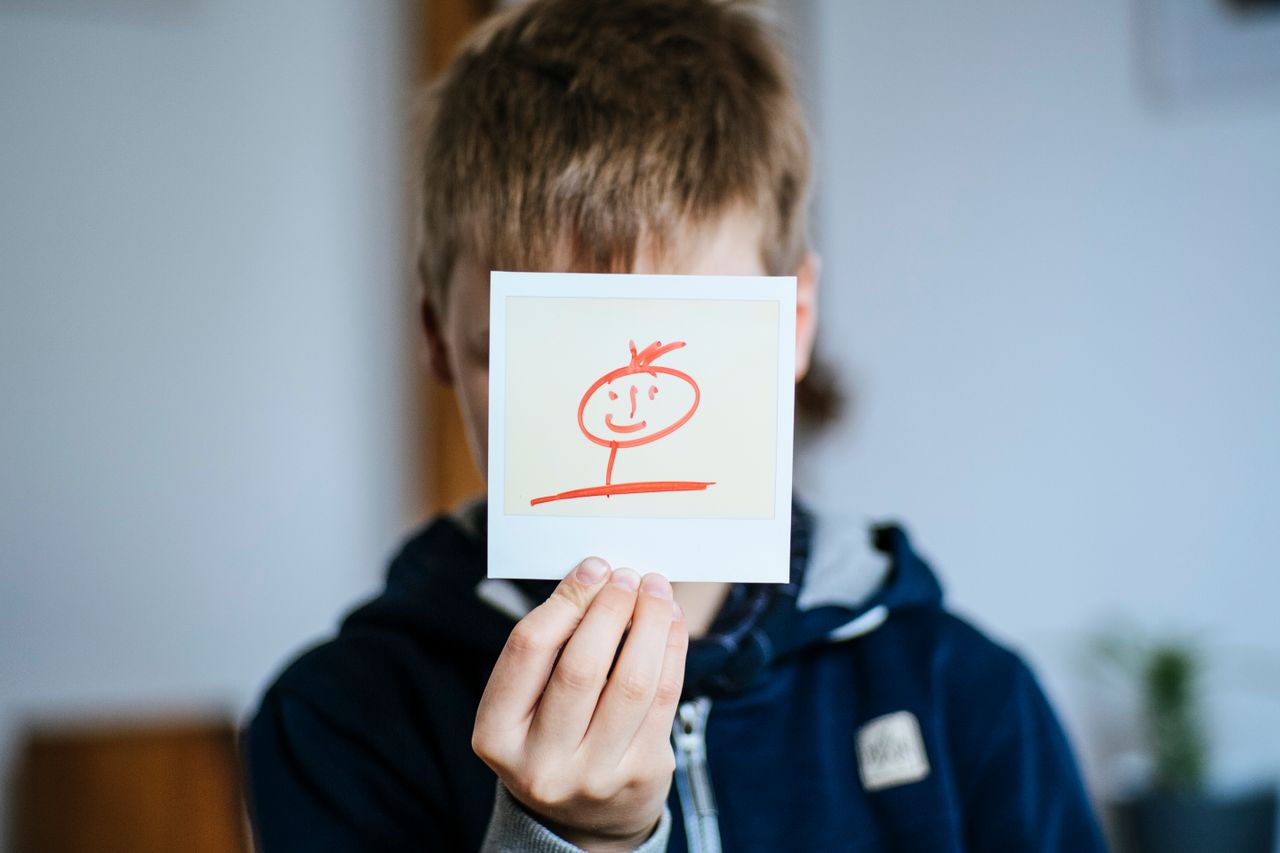
The boy stopped crying in less than a minute, and went back to the climbing structure.
We have seen something like that many times a day and have learned something from that experience, which is rarely considered in emotions activities for preschoolers guides. Namely, the activity itself is not the goal. The naming is the goal. All other tools - emotions charts, puppets, mirrors, games, etc. - serve the purpose of creating the vocabulary that a child uses in the crying situation. So, if your activity does not help a child to be able to say "I am frustrated" instead of hitting someone, it means that the activity is useless.
Now let's look at activities that actually work, divided into ones that you can use during calm moments and ones that work in the heat of the situation.
Emotions Activities for Preschoolers That Build the Vocabulary in Calm Moments
Almost all emotion activities for preschoolers, except some listed below, belong to the category of "calm". You cannot teach any words to a crying kid. You can teach them in a calm setting on a Tuesday afternoon, and when something terrible will happen on the Saturday, these words will be available to your child.
Mirror activity is the easiest way to teach emotions to preschoolers. Sit together with a kid in front of the mirror and demonstrate different expressions of emotions. For example, angry face, sad face, surprised face, scared face, etc. The child sees how his/her facial muscles move and learns to connect the internal feeling with an external facial expression - a task that is quite complicated for three-year-olds. Doing it two minutes per day, in two weeks most children will be able to name at least four or five emotions.
Draw emotions on paper plates. Make a set of faces that demonstrate different emotions. Hold plates up and ask the child to say what this particular person feels.
Emotions charades activity helps kids to use their bodies to express emotions. You act out a particular emotion using your entire body. If the child understands, he/she demonstrates the same. This activity is even better than the previous ones because the emotion lives inside the body of a preschooler and not in his/her brain.
Pause at the certain pages of your books and discuss how the characters of a story feel and why they feel that way. No additional materials are required, only your imagination.
Color-feeling matching activity helps kids to understand the connection between colors and emotions. Red is angry. Blue is sad. Yellow is happy. Grey is tired. This activity helps children to develop the vocabulary of colors and emotions at the same time.
Activities for Preschoolers About Emotions in a Hot Moment
Here are the activities that you can use if your child is crying now. Activities for preschoolers about emotions during meltdowns are not activities in a craft sense. These are just scripts.
Out loud naming of the emotions is a key point. Tell the child calmly what is happening now with him/her. "You are angry," "You wanted this toy," "It was scary." Do not fix or explain anything, just tell a child what is happening now.
Neuroscience research on affect labeling supports the idea that naming emotions out loud makes the child less upset. But if you doubt it, just try it and you will see the results.
The breathing technique works, but only in a form understandable for the preschooler. "Do a deep breath" doesn't mean anything to a four-year-old. Smell the flower, blow out the candle - pretend you have a candle in your hand. Blowing bubbles is another great breathing activity, just disguised as fun.
Physical release of emotions is the most underestimated tool on this list. When the child is overwhelmed with his/her emotions, the energy is stored in the body and it should be released. Push against the wall as hard as the child can, stomp like a dinosaur, squeeze a cushion, run to the fence and back.
Calming down corner is a great tool. Put some cushions, a soft toy, a book, and maybe a jar with glitter water in it. Calming down corner should give your child an opportunity to go somewhere to calm down voluntarily. The difference between this activity and time out should be clear.
And then, after the child calms down, you will be able to have a conversation. Never during a meltdown. It won't be successful.
Emotional Activities for Preschoolers That Involve the Whole Body
When you work with preschoolers' emotions, the activities involving the whole body work better. At this stage of development a frustrated four-year-old child is frustrated with his/her arms and legs, not in the abstract mental space.
Emotion freeze dance activity involves listening to the music that changes its mood (fast and bright, slow and heavy, and then tense), and moving to the music. The children express four or five emotions in 10 minutes without instructions about emotions.
Feelings yoga combines a specific pose with a particular emotion. Strong pose for bravery, curled pose for being scared, etc. Pose will stay in memory of a child for a long time, and he/she may use it without words.
Heavy work activities regulate nervous system in a way that a verbal explanation cannot. This is why 2-hour session on climbing structure calms down the child significantly. It is not because the child is exhausted. The proprioception did its job.
Emotions preschool activities that involve physical actions followed by naming are the most efficient ones. Stomp the angry emotion out of the body, and then name the feeling. Run away the frustration, and then discuss it. Order is important. Physical actions come first, and words come second.
Activities for Emotions Preschool Classes Do Together
There is a special layer of activities for preschool classes, because in case of preschoolers, other children are always watching.
Feelings circle activity at the end of the day helps kids to learn new words. Each child says one word about his/her feelings in the end of the day. Kids hear how other children use the words to describe the feelings they already understand but cannot name.
Role-playing games with puppets or dolls allow a group of kids to resolve the conflicts in a way they encounter them daily. Children who cannot discuss their own situation can often solve the conflict of other kids.
Cooperative games such as parachute play, building towers together, any game with the shared goal, generates emotions. Frustration when the tower falls, and joy when it is constructed successfully. Adult explaining what has just happened is worth a dozen worksheets.
Preschool activities for emotions in groups need to have an exit strategy. Every child who needs to leave the circle should be able to do that. Feelings activity that forces a child to participate teaches the opposite of what it intends.
Activities On Emotions for Preschoolers That Parents Get Wrong
The list of mistakes in emotions activities for preschoolers is rather short because all mistakes that people usually make are done in good intentions.
For example, asking "why are you crying" to a three-year-old kid. He/She doesn't know it, because the part of the brain that can answer this question is years away from the child's development.
Rushing to solve the problem. Instinct to solve the problem immediately takes away the right of the child to feel the feeling. Waiting for 30 seconds changes everything.
Labeling feelings as good/bad. Anger is not a bad emotion, it is a message. Children who learn that some emotions are unacceptable learn to hide their feelings.
Doing the activities only when things are going wrong. Any emotions activity for preschoolers works only when it becomes a regular part of a routine, not an emergency response. The child who has played the mirror activity a hundred times on ordinary days will have words in difficult days.
Expecting linear progress. Four-year-old child who named his/her frustration beautifully on Monday will bite someone on Thursday. It is not a failure. It is the age.
What We See Happening on the Play Floor in Los Angeles
Running an indoor play space in LA allows us to observe preschoolers' emotions in a controlled environment and some patterns are obvious.
First ten minutes of the session are almost never emotional. Children arrive, orient, find a play structure and start playing. Emotional moments happen around twenty-fifth minute, when the negotiations between kids have started - who goes first, who is playing with whom, who took the place.
Consistent pattern that we've noticed is that the children who handle the negotiations better are not the calmest ones. They are the children whose adults name the emotions out loud. You can hear it constantly in our play spaces: "you are disappointed," "he is not ready to share yet," "that made you mad." The children recover from these situations faster and return to play.
Another observation that we have is about the effect of physical play. A child who came to the play space emotionally overloaded from the trip across LA will be a different child after forty minutes of climbing. Emotional volatility will decrease. This is the reason why we say that our play space is a regulation tool as well as entertainment place.
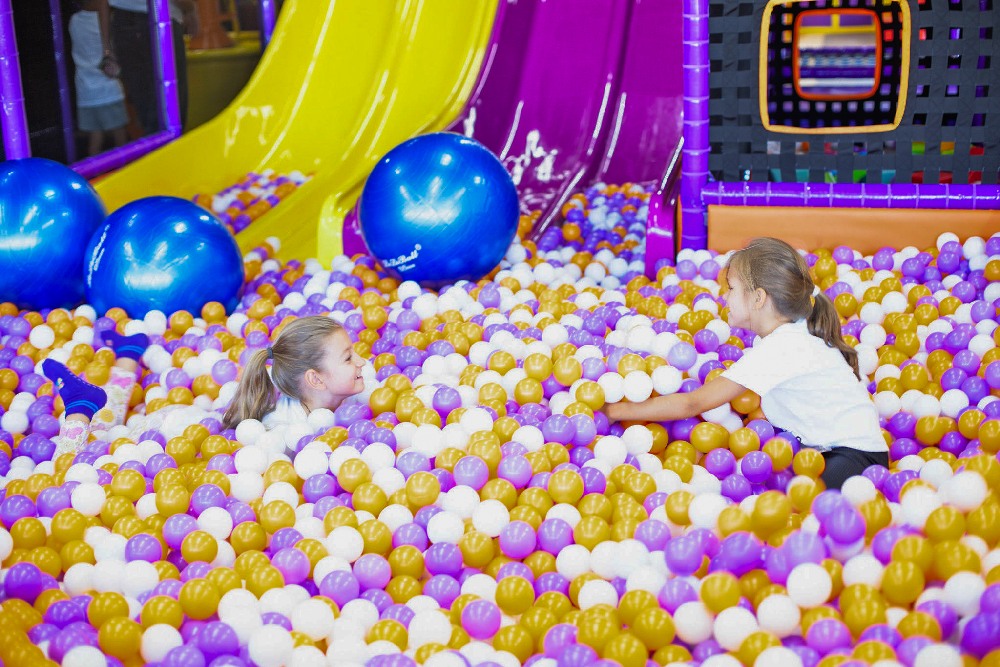
Our floors at 828 Pico Blvd in Santa Monica and 10672 West Pico Blvd in Los Angeles provide walk-in Open Play with no reservations - weekdays from 10 AM, Sundays from 9 AM. Multi-level climbing structures, zones by level of the challenge, soft surfaces everywhere, seating area with clear sight lines for adults to watch children and intervene in necessary cases. Prices: $35 for the first kid for 2 hours session, $25 for the second sibling, $20 for the third, two adults included in the price. $200 monthly membership is what families use, when the sessions become a regular part of the week routine.
Emotions Activities for Preschool Routines That Will Last Beyond the Activity
Activities are the scaffolding. What stays is the routine around them.
Emotions activities for preschool age children stop being activities and turn into habit when they are connected to something that already happens every day. Name the emotion at the bed time. One-word check in in the car. Story stop in the book that you already read. Ninety seconds of something in the existing routine beats twenty minutes of something you do twice and never again.
The other thing that will stay is the modeling by adults. Parent who says "I am frustrated, I need a minute" in front of a preschooler is teaching the child more in one sentence than in a month of emotions charts. Children copy the regulation that they observe far better than regulation that is taught to them.
And one more thing to say: it takes time. Preschooler who can name the anger is not the preschooler who stopped experiencing it. The goal is not the calm child. The goal is the child who can name the storm - and adult who stays calm in the middle of it.
FAQ
-
Around two years old with the simplest labels - happy, sad, mad, scared. By three or four, children can name a bigger list of emotions: frustrated, disappointed, excited and nervous. You should start from naming what you observe in the child.
-
Get low, stay calm, and name what you see in a short sentence. "You are angry." Then stop talking. Physical release helps after the peak passes - stomping, pushing a wall, running. The discussion of what happened comes afterwards, never during. Teaching in the middle of the storm does not work.
-
Yes, as a vocabulary-building tool in calm moments. These are much less useful during meltdown, when a child is emotionally flooded. Use them as the practice tool in ordinary days, and the words will be available in hard days.
-
Heavy work - climbing, pushing, pulling, carrying - provides the proprioceptive input to the nervous system that settles it in a way that talking cannot. This is why after two hours of play on the play structure the child looks noticeably calmer. The body discharges what words could not.
-
Completely normal. Child who was able to name his/her emotions well one week will have a meltdown without words the next week. The development at this age is not linear, and regression during illnesses, transitions or tiredness is not concerning.
-
Any space that provides the safe play - climbing, running, pushing, jumping. Our Santa Monica play floor on 828 Pico Blvd and our Los Angeles play floor on West Pico Blvd provides the walk-in Open Play with no bookings required - two hours of physical regulation plus seating area for adults to observe the social interactions and name emotions in real time.