
Camera Obscura Art Lab Los Angeles - The 1898 Optical Secret Hiding Two Blocks From the Pier
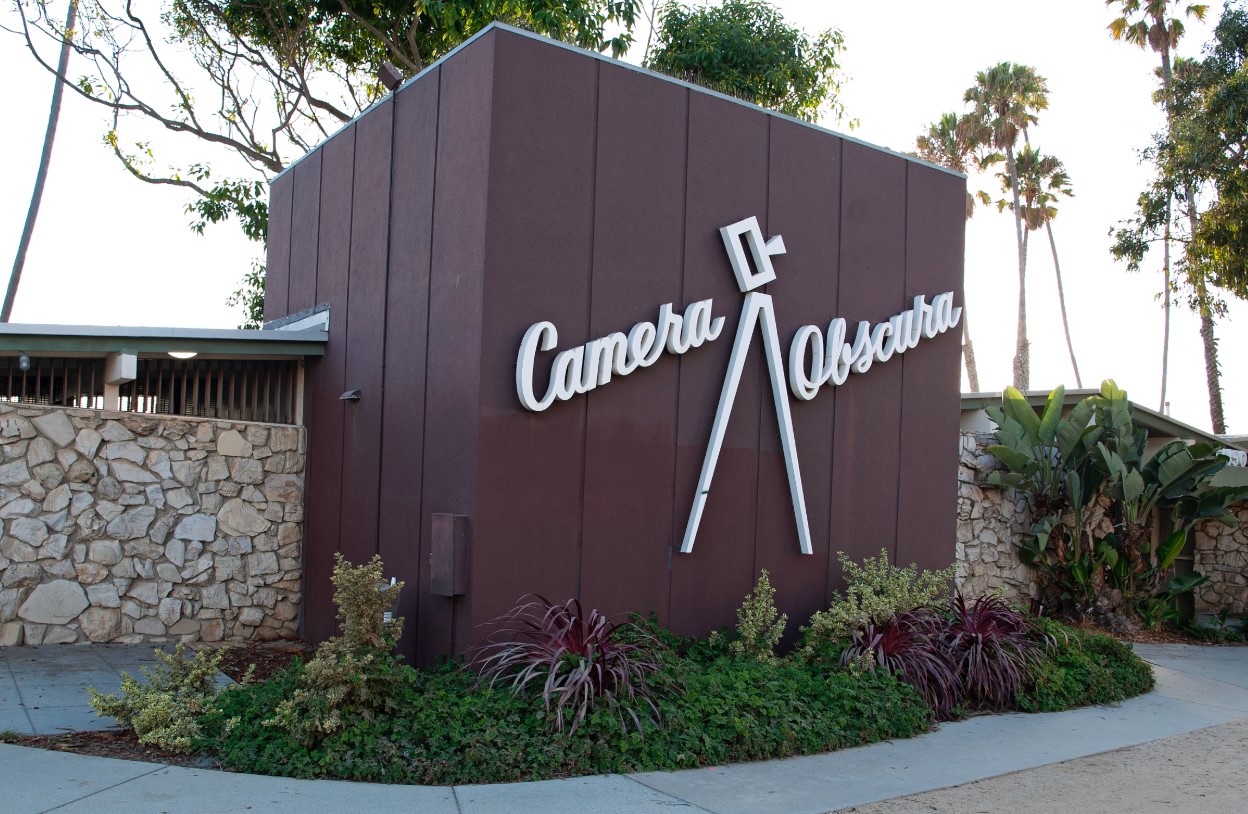
I love places like this. The ones that don't advertise. The ones you find out about from someone who found out about them from someone else.
The Camera Obscura Art Lab is that kind of place - part historical artifact, part working community arts center, and entirely unlike anything else on the LA coastline. Here's the full story: what it is, how it works, what it costs, what's currently open, and how a visit fits into a family day on the westside.
Camera Obscura Art Lab and What's Actually Inside the Building
The Camera Obscura Art Lab operates on two levels - literally and functionally. The ground floor is Santa Monica's community arts practice space, run by the city. Artists-in-residence work in the studio room throughout the year; for the current cycle, six Los Angeles County-based artists were selected for the residency program, and the space hosts workshops, exhibits, and cultural programming that changes with each resident. You can watch working artists at work. Sometimes there's dance. Sometimes writing workshops. Sometimes sewing. The roster genuinely rotates.
Upstairs is the reason the building has its name. The camera obscura room - a darkened chamber with a large circular white viewing table at its center and what looks like a ship's wheel beside it. A rotating turret on the roof holds a periscope-and-mirror system, and when the mechanism operates, natural light travels down through the optics and lands on the table as a live, moving image of the world outside. The beach. The palm trees along Palisades Park. Cyclists on the path. Waves, in real time, painted in light on a table in a dark room.
No electricity involved in the image itself. No screen. The technology is thousands of years old - the camera obscura principle predates photography entirely and was described by ancient scholars long before anyone built a lens. What you see on that table is physics doing something that still, honestly, reads as magic.
Camera Obscura Los Angeles and the History That Comes With It
The camera obscura Los Angeles families can visit today arrived in Santa Monica at the very end of the nineteenth century. Robert F. Jones - nephew of Senator John P. Jones, one of the city's founders - installed the device in 1899 as a seaside novelty attraction, the kind of Victorian-era entertainment that boardwalks up and down both coasts once featured. It originally stood at the North Beach Bath House down on the sand, and it was even a stop on the old Balloon Route streetcar tour of Los Angeles - a fact that places it inside LA tourism history from the era when tourism here meant trolleys and sun hats.
The city purchased the device in 1910, and it moved up the bluff into what was then called Linda Vista Park - today's Palisades Park. Since November 1955 it has lived in its current home, a purpose-built midcentury building designed by architect Weldon J. Fulton. The adjoining space served for decades as a senior recreation center before the city rededicated the building to the arts in 2013 and the Art Lab era began.
That timeline matters because of what it makes this place: one of the last of its kind. The seaside camera obscuras that were once common attractions have almost entirely vanished. This one survived - through relocations, through changing decades, through the neighborhood transforming around it - and it survived in continuous public ownership, which is why access has always been free.
Camera Obscura Museum and How the Viewing Experience Works
Calling it a camera obscura museum slightly overstates the formality of the thing, and that's part of the charm. There is no gift shop. No ticket counter. No audio guide. For years, the ritual worked like this: you walked into the building, traded your driver's license at the front desk for a key, climbed a short staircase, unlocked a door, and found yourself alone - or nearly alone - in a dark room with a hundred-and-twenty-year-old optical instrument and a live image of the Pacific Ocean glowing on a table.
You could turn the wheel. The turret on the roof rotates a full 360 degrees, so the projected view sweeps from the beach to the pier to the park to the street. Kids grasp it instantly - it's a giant periscope, essentially - and the camera obscura room produces a specific reaction in children that screens never do. The image moves because the world is moving. Right now. Outside. That connection lands even with four-year-olds.
Important current status: the camera obscura mechanism has been closed to general public viewing since 2020, and as of now it opens only during special events, while the Art Lab downstairs continues its residency and workshop programming. The city's cultural affairs office at (310) 458-8350 is the direct line for asking about upcoming mechanism-access events. This is worth checking before making a special trip if the upstairs room is your whole reason for going - and worth checking regularly, because special-event openings do happen and they're the current way in.
The Santa Monica camera obscura photos that circulate online - the glowing table, the dark chamber, the wheel - capture the look but not the sensation. It's one of those experiences where the photograph is the least of it.
Camera Obscura Prices and the Best Ticket Answer in Los Angeles
Here's a section that will be short because the answer is short: camera obscura prices are zero. Admission has always been free. The building belongs to the City of Santa Monica, the Art Lab is a public cultural facility, and no ticket has ever been required to enter during operating hours.
Camera obscura tickets, likewise, do not exist as a thing you can buy - there's nothing to book, no timed entry, no platform. The Art Lab's ground floor is open during its posted hours, historically weekdays with Saturday hours as well, and specific workshops run by artists-in-residence occasionally have their own registration. For the mechanism upstairs, access currently comes through those special events rather than through anything resembling a ticket purchase.
In a city where the family-attraction landscape has drifted toward dynamic pricing and booking windows, a free, historic, city-owned oddity two blocks from the Pier is a genuinely rare category. The catch is simply the current limited access to the upstairs room - which makes this less a plan-your-whole-day destination and more a check-ahead-and-swing-by one.
Camera Obscura Near Me and Where It Sits in a Westside Day
For anyone searching camera obscura near me from the LA westside, the answer points to one place: 1450 Ocean Ave, Santa Monica, CA 90401, in Palisades Park between Broadway and Santa Monica Blvd, just north of the Pier. The camera obscura Santa Monica location is walkable from the Third Street Promenade, from the Pier itself, and from most of downtown Santa Monica. Parking works best at Structure 6 on 2nd Street around the corner; Ocean Avenue meters exist but fill with beach traffic.
The Santa Monica camera obscura sits inside one of the most family-trafficked half-miles in Los Angeles, which is exactly what makes it useful as a stop rather than a destination. A visit takes ten to fifteen minutes - check the Art Lab floor, see what the current resident artists have going, ask about the mechanism. Then the day continues: Palisades Park's bluff-top path, the Pier, Tongva Park a few blocks south, lunch somewhere on Ocean or the Promenade.
That's the honest shape of it. Camera obscura Santa Monica CA is a texture stop - the strange, historical, free thing you fold into a bigger westside morning. Families who treat it that way come away delighted. Families who drive an hour expecting a full museum experience come away confused. Set the expectation right and it's one of the best free ten minutes in the city.
Camera Obscura Tickets Are Free but Kids Still Need Somewhere To Run
And here's the part every parent already knows is coming. A camera obscura tour - even a magical one, even one where your kid turned a ship's wheel and swept a live image of the ocean across a glowing table - takes fifteen minutes. The historical wonder lands, the moment happens, and then you're standing on Ocean Avenue at 11 AM with children who have absorbed something beautiful and burned exactly none of their physical energy doing it.
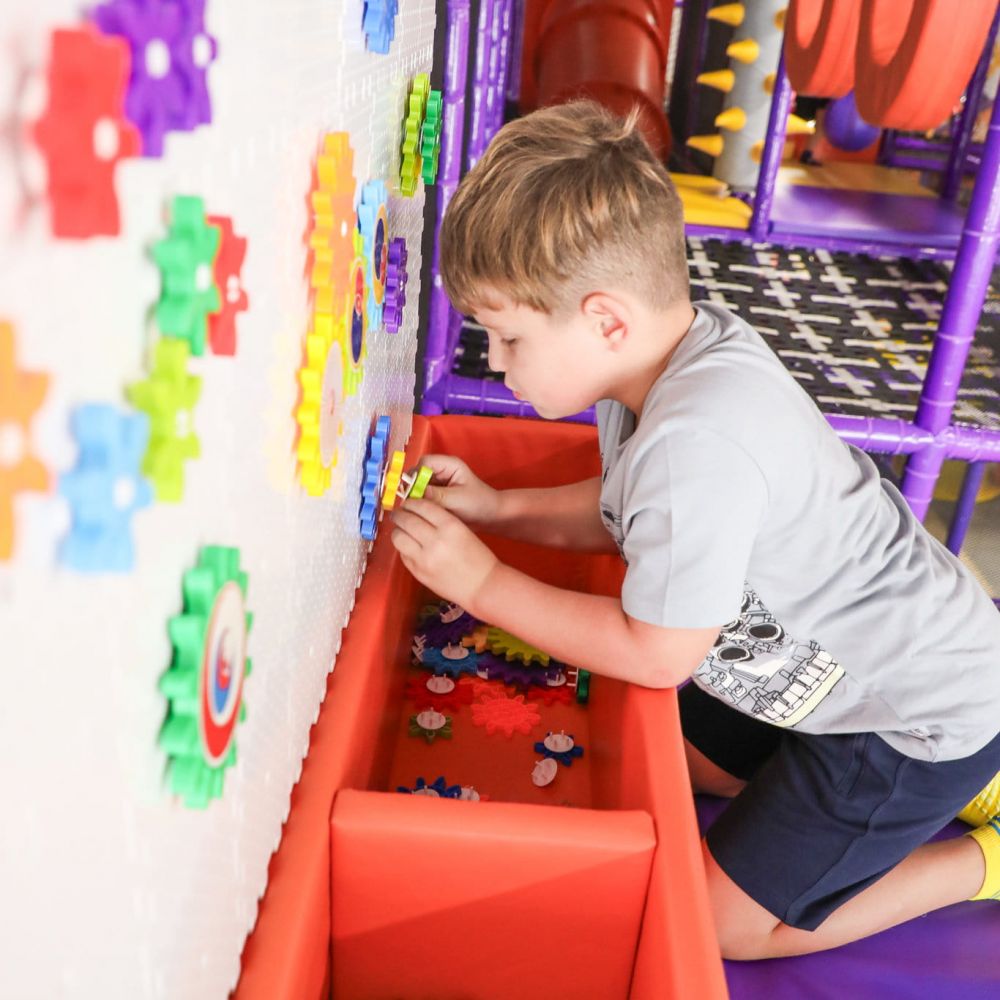
The westside day needs a movement anchor, and that's the slot Fun Play World fills for families across Santa Monica and Los Angeles. The Santa Monica location at 828 Pico Blvd is under ten minutes from Palisades Park - a straight shot down the coast-side grid - and the Los Angeles location at 10672 West Pico Blvd covers the inland westside. Both run walk-in Open Play, weekdays from 10 AM and Sundays from 9 AM. First child is $35 for a two-hour session, $25 for a second sibling, $20 for a third, with two adults included per family. The monthly membership at $200 turns it into a standing routine rather than a per-visit decision.
The pairing works better than it sounds like it should. Morning wonder at a nineteenth-century optical device, lunch on the westside, then two hours of climbing, sliding, and full-speed running in a climate-controlled space while the adults sit down with sightlines to the whole floor. Culture and cardio. The kids get both halves of what they actually need from a day.
We've watched the pattern on our own floor enough times to trust it - children arrive from a morning of looking at things, and within ninety seconds of clearing the entrance they're doing the thing their bodies were waiting for all morning.
LA Families and the Art of Mixing Old Wonders With New Routines
Camera obscura art - and the broader world of pre-photographic optics the Santa Monica device represents - has quietly become a favorite entry point for teaching kids how images work. Before explaining a phone camera, show them a room that is a camera. The pinhole, the mirror, the inverted world righted by optics. Several LA-area schools have historically used the site for exactly this, and the Art Lab's education-adjacent programming carries the thread even while the mechanism access is limited.
That's the deeper value of keeping places like this on the family map. Los Angeles is dense with new experiences - the immersive installations, the timed-ticket spectacles, the seasonal pop-ups that arrive and vanish. The camera obscura is the opposite category: permanent, free, older than the city's streetlights, and completely uninterested in your booking window. A childhood in LA that includes both categories - the shiny new and the strange old - is richer than one built on either alone.
And underneath both, the constant layer: the weekly physical-play routine that keeps children regulated enough to enjoy any of it. Birthdays live in that layer too. Fun Play World runs birthday parties at both locations on four package levels - Basic at $1,800, Adventure at $2,300, Ultimate at $2,700, VIP at $5,700 with food, dedicated staff, and full setup-to-breakdown coverage. An 18% service fee applies to all events; a 40% deposit holds the date with the balance due five days out. Weekend and summer dates at the Santa Monica location in particular book early - the westside birthday calendar is a competitive place.
FAQ
-
The Art Lab's ground-floor community arts space continues operating with artist residencies, workshops, and exhibits. The camera obscura mechanism upstairs has been closed to general public viewing since 2020 and currently opens only during special events. Call the city's cultural office at (310) 458-8350 or check the Santa Monica city website for upcoming access events before planning a trip around the upstairs room specifically.
-
Nothing, and no. Admission has always been free - the building is a City of Santa Monica public cultural facility. There is no ticketing system. Specific artist-led workshops occasionally have their own registration, but walking in during open hours costs nothing.
-
1450 Ocean Ave, Santa Monica, CA 90401 - in Palisades Park between Broadway and Santa Monica Blvd, a short walk north of the Pier. Parking Structure 6 on 2nd Street is the practical option; Ocean Avenue street parking exists but competes with beach traffic, especially on weekends.
-
As a ten-to-fifteen-minute stop inside a bigger Santa Monica morning, genuinely yes - the live projected image is one of the few historical attractions that lands instantly with young kids, when mechanism access is available. As a standalone destination requiring a long drive, no. Check current access status first, fold it into a Pier-and-park morning, and pair it with somewhere the kids can physically run afterward.
-
The standard westside sequence: the cultural stop, lunch, then an active afternoon. Fun Play World's Santa Monica location at 828 Pico Blvd is under ten minutes away and runs walk-in Open Play with no booking needed - the movement half of a day that started with wonder.