
Tongva Park Santa Monica — What Families Need To Know About This Six-Acre Westside Landmark
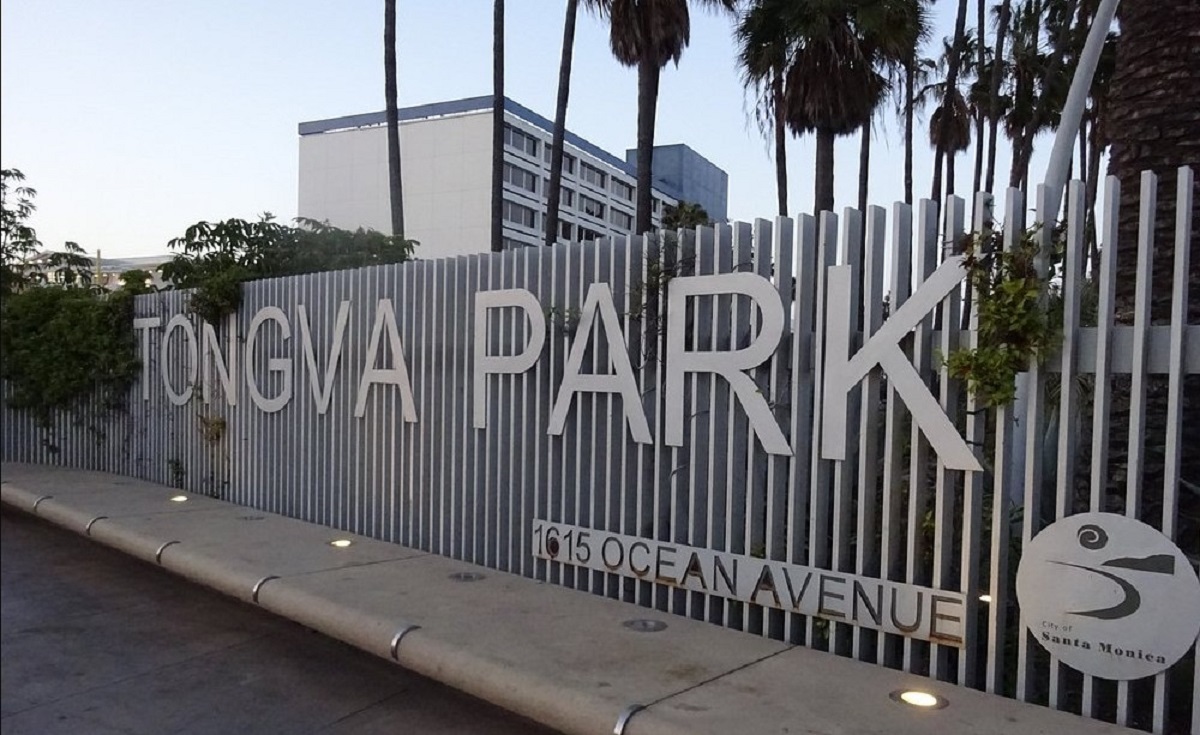
The name comes from the Tongva people — the indigenous community who have lived in the Los Angeles basin for thousands of years. That naming isn't incidental. It's a recognition that this land carries a history longer than the parking lot, longer than Santa Monica's incorporation, longer than California's statehood. For families with older children, the context is worth carrying into the visit.
What follows is the practical guide: what's here, how parking works, what the playground offers, and how the park fits into a full family day on the westside.
Tongva Park Santa Monica CA — Location, Size, and the Layout That Surprises First-Time Visitors
Tongva park Santa Monica CA sits at 1615 Ocean Ave, Santa Monica, CA 90401 — the full address for navigation purposes is Tongva Park Ocean Avenue Santa Monica CA 90401 — just south of Colorado Avenue, between Ocean Avenue and Main Street, close to Santa Monica City Hall and within walking distance of the Pier. The address puts it at what is genuinely one of the most walkable intersections on the westside: downtown Santa Monica, the Pier, the Third Street Promenade, and the beach are all reachable on foot from the park's entrances.
The park divides into four named sections. Observation Hill is the high point — literally and figuratively — offering panoramic views of the Pacific Ocean and the Santa Monica Pier that are among the clearest in the area outside of Palisades Park. Discovery Hill is the family section, with the playground, the splash pad, and the shaded picnic tables. Garden Hill is the botanical section, with native and locally appropriate plants: lilies, agaves, drought-tolerant grasses, the specific palette of a California landscape that isn't trying to look like somewhere else. And Gathering Hill has the amphitheater, used for free public concerts and community events, alongside the Weather Field art installation.
The notable trees deserve mention. "Morty" — a large Moreton Bay fig — anchors one section of the park with a trunk circumference that takes a moment to process. The "Three Amigos" are three rusty fig trees, each weighing over 100 tons, that were relocated 550 feet from their prior location at Main Street and Olympic Drive when the park was created. They were moved as mature trees. The fact that this was possible, and that they survived, gives the park something living and old in a space that otherwise reads as contemporary.
Hours run daily from 6 AM to 11 PM. Free entry. Free Wi-Fi throughout. The view from Observation Hill is worth arriving early for, before the tourist-facing parts of downtown Santa Monica fill.
Tongva Park Parking — The Honest Version for Families Driving In
Tongva park parking is the catch. There is no on-site lot. The park was built where a parking lot used to be, which is the correct choice for the city and the wrong news for families arriving by car for the first time.
The surrounding options are workable but require knowledge. Metered street parking runs on Ocean Avenue and the blocks immediately east — competitive on weekends and essentially unavailable during large events or summer holidays. The Santa Monica Place mall two blocks east has a free parking structure for shoppers that many visitors use as a practical default, with the walk back to the park taking around five minutes. The Chez Jay parking lot, accessible through an alley off Olympic, offers some spaces. The LA Metro's Downtown Santa Monica Station sits nearby for families coming in from further east who'd rather skip the car entirely.
For families who want the most direct route, searching "Tongva Park Ocean Avenue Santa Monica CA" in any navigation app will take you to the correct entrance. Tongva park parking during peak season follows the same rule as most westside Santa Monica spots: arrive before 9 AM if you're driving on a summer weekend, or arrive by transit and skip the calculation entirely. The Big Blue Bus serves multiple stops near the park on its Ocean Avenue routes.
For families cycling in — the Marvin Braude Bike Trail runs directly behind the beach adjacent to the park — bike parking is available at all park entrances. Santa Monica Tongva park is genuinely one of the more bikeable major parks in the city, and families who make the coastal bike ride part of the morning get both the exercise and the destination built into one trip.
Tongva Park Playground and the Discovery Hill Section for Families With Young Children
Tongva park playground is the piece most families with children are searching for before they arrive, and Discovery Hill is the answer. This section of the park concentrates the family-specific amenities — the playground structure, the splash pad, and the shaded picnic tables that function as base camp for a morning visit.
The tongva park playground is sized appropriately for children roughly two through ten, with equipment that gives different age groups different challenges rather than funneling everyone to the same piece of apparatus. The structures are maintained — this comes up in reviews often enough to be a reliable observation rather than an occasional lucky visit. A city park that keeps its playground equipment in genuine working order through continuous use earns that specifically.
The splash pad on Discovery Hill is the seasonal amenity that changes the park's character significantly. It runs from Memorial Day through summer, with tongva park Santa Monica hours for the splash pad specifically set at 9 AM to 8 PM during operating season. On hot LA days, the combination of the splash pad and the shaded picnic area directly adjacent to it produces a self-contained family afternoon without needing to go anywhere else. Children play in the water, dry off in the shade, eat, go back to the water. Repeat.
The splash pad is a free, open water feature — no queuing, no height restrictions, no scheduling. Children move through it freely. The surface around it drains well and the whole area was designed with the understanding that wet children are the expected outcome, not an inconvenience.
For families who arrive outside of splash pad season — fall and early spring — the playground and picnic area still function fully. The park as a whole loses its single most dramatic amenity without the water feature, but the topography, the trees, the ocean views from the hill above, and the general quality of the design all hold their value across seasons.
Tongva Park Reviews — What the Consistent Feedback Actually Says
Tongva park reviews cluster reliably around a few observations that have stayed consistent since the park opened. The view from Observation Hill is the most frequently mentioned: visitors who find the hill describe it as unexpected — you don't come expecting a panorama from a park this far inland from the bluff, and the sight line to the water reads as a gift. Several reviews describe stopping partway up the hill and looking back in a way that delayed the climb.
The splash pad gets near-unanimous approval in family reviews. Its combination of free access, central location, and the quality of the space around it — shade, seating, restrooms nearby — makes it one of the more practical water play options in Santa Monica for families who want something beyond the beach. Reviews from first-time visitors frequently note that they didn't know it existed until they walked through the park.
Santa Monica tongva park reviews also note the scale. The park reads larger than 6 acres because of the topography. The rolling hills mean different sections of the park are not visible from each other, which creates a feeling of multiple separate spaces rather than one open field. Children who disappear over a hill are in the same park — they're just around the corner of a contour. That design produces a specific kind of engaged exploration in children under ten that flat parks rarely do.
The consistent critical note in reviews is the parking situation — no on-site lot, competitive street parking on busy days. It's the practical friction that comes up whenever a family is giving an otherwise positive account of a visit. Planning around it, as described above, is the effective approach.
Tongva Park Santa Monica and the Name's Significance
Tongva park Santa Monica carries a name that points toward a history most visitors don't arrive knowing. The Tongva people — also known as the Gabrieliño — are the indigenous community of the Los Angeles basin and Channel Islands, with a presence in this area that goes back at least 7,000 to 8,000 years. When European settlers arrived in the 18th century, the Tongva population numbered in the thousands across dozens of villages throughout the basin.
The naming of a prominent Santa Monica public space in honor of the Tongva is a recognition with meaning beyond civic gesture. The land where the park stands — where the city stands — was Tongva territory before any of the city's modern history began. For families with children old enough to engage with this, the park name is an entry point to a larger conversation about whose history is acknowledged in the places we use daily.
The park doesn't make this history intrusive or didactic. It's there in the name, in the use of native plants that reflect the region's actual ecology rather than an imported aesthetic, and in the commitment to design that acknowledges the natural landscape the Tongva people lived within. You can visit the park without thinking about any of this. Or you can bring it in and the space holds it without contradiction.
Tongva Park Los Angeles — How It Fits Into the Broader City Context
Tongva park Los Angeles occupies a specific position in the westside park landscape that is worth understanding before a first visit. It is not a neighborhood park in the traditional sense — it has citywide and tourist draw because of its proximity to the Pier, City Hall, and the Third Street Promenade corridor. On summer weekends it functions as part of the downtown Santa Monica public space system rather than as a quiet neighborhood green.
The contrast with Crescent Bay Park, one mile south on Ocean Avenue, is instructive. Crescent Bay is quieter, more residential in character, with a stronger community-park feeling even on busy days. Tongva park in Santa Monica is more urban, more varied, more deliberately designed as a destination that serves a wide range of users simultaneously — the jogger on the path, the family at the splash pad, the visitor photographing the Pier from Observation Hill, the local attending a free concert at the amphitheater.
Tongva park in Santa Monica sees its family-specific traffic peak in the morning, specifically around the Discovery Hill section, and shifts toward a broader visitor mix through the afternoon. Families who want the playground and splash pad with the least competition are consistently better served by morning visits — the 9 AM to noon window on weekdays hits the sweet spot before the tourist-facing part of downtown Santa Monica fully activates.
How Los Angeles Families Use the Pico Corridor After a Morning at Tongva Park
Los Angeles families who spend a morning at Tongva park on the westside are generally operating within a circuit that includes the downtown Santa Monica area, the beach, and the Pico corridor that runs east from Ocean Avenue toward the inland neighborhoods. The park sits at the western end of that corridor, and families who know the area tend to move along it naturally through the day rather than treating the park as a standalone destination.
The practical shape of that morning: splash pad and playground at Discovery Hill from opening, Observation Hill for the view and the children burning off remaining energy on the hills, lunch at one of the cafes or quick-service restaurants near City Hall or on the Third Street Promenade, and then the decision of what to do with the early afternoon before the day winds down.
That afternoon question is where the Pico Boulevard corridor's options matter. The street connects the beach end of Santa Monica to the broader westside, and the range of family-friendly options along it becomes relevant when a beach morning has run its natural course and children still have energy they haven't fully spent.
LA Afternoons and the Indoor Option That Handles the Rest of the Day
LA afternoons in summer have a specific physics. The morning coastal cool that makes Tongva park's playground comfortable at 9 AM is gone by noon. Children who played well in the morning are either fully spent — in which case the day is done — or still carrying energy in a form that the beach or the park won't easily absorb after two hours in direct sun.
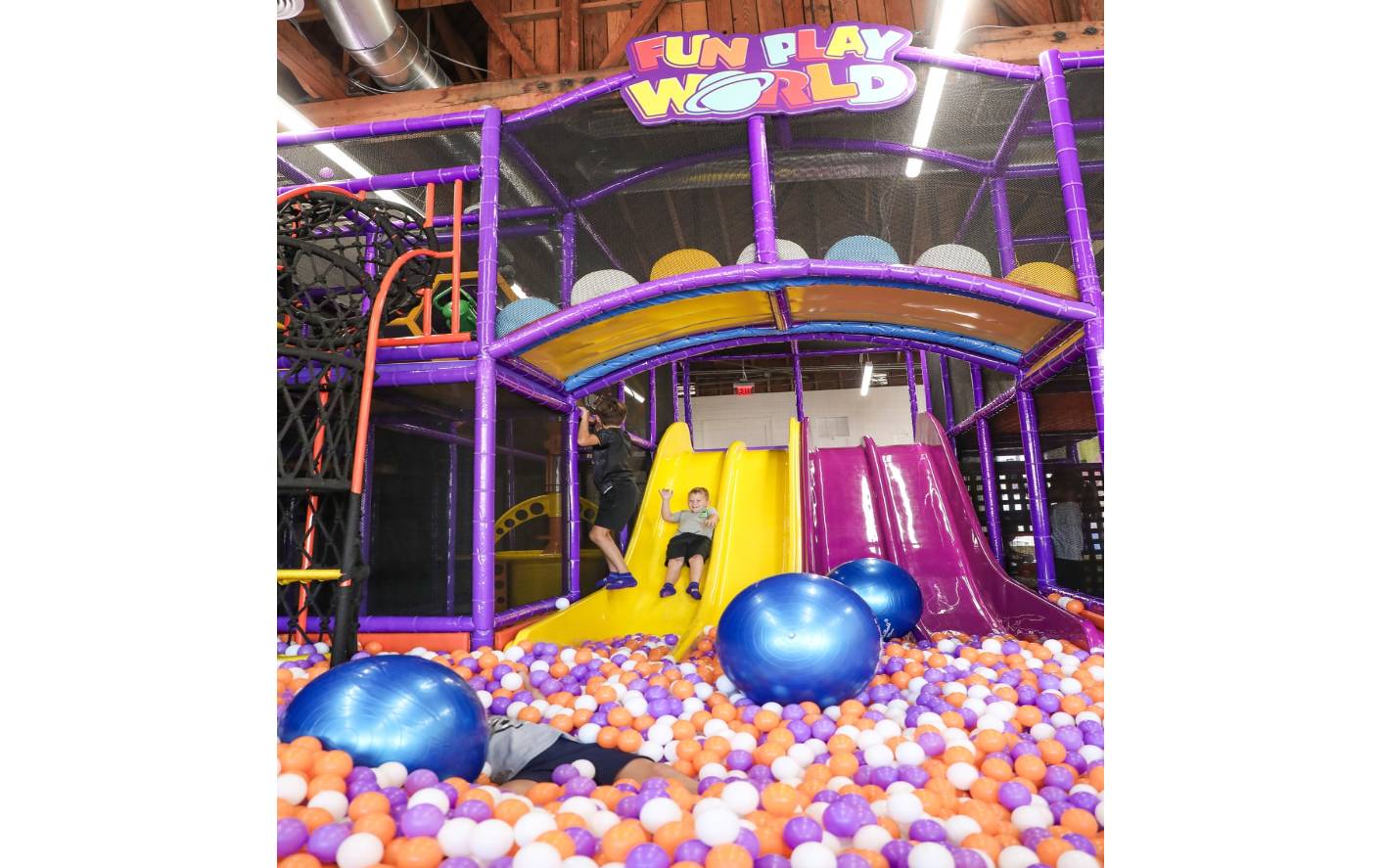
The move to an indoor space in the early afternoon is a pattern LA families develop through experience. Fun Play World at 828 Pico Blvd in Santa Monica sits directly on the Pico corridor — roughly ten minutes from Tongva park for families heading east after their morning visit. The indoor play space covers the afternoon's requirements: air conditioning, climbing structures zoned by challenge level, soft flooring, seating for adults who need to stop moving.
The transition from the park to the play space follows a natural sequence. Morning outdoors, lunch somewhere on the westside, afternoon indoors. Children get two different kinds of physical activity. Adults get to sit somewhere that doesn't require constant positioning around a playground structure. The day holds together into the evening without the friction that comes from trying to extend the outdoor session past the point where weather and energy cooperate.
Open Play runs weekdays from 10 AM and Sundays from 9 AM. First child is $35 for a two-hour session, $25 for a second sibling, $20 for a third. Two adults per family included at no additional cost. Monthly membership is $200 for families who make the outdoor-indoor circuit a regular weekly pattern.
Birthday parties at Fun Play World scale across four packages. Basic starts at $1,800, Adventure at $2,300, Ultimate at $2,700, VIP at $5,700. The team handles setup, catering at the relevant levels, and breakdown — an 18% service fee applies to all events, covering the team's full coordination. A 40% deposit holds the date, with final balance due five days before the event.
FAQ
-
The park is open daily from 6 AM to 11 PM, free of charge. The splash pad on Discovery Hill runs seasonally — from Memorial Day through summer — with tongva park Santa Monica hours for that specific amenity set at 9 AM to 8 PM during operating season. Outside of summer, the playground and all other park sections remain fully open on the standard daily schedule.
-
There is no on-site parking lot. Street parking on Ocean Avenue is metered and competitive on weekends. The free parking structure at Santa Monica Place mall, two blocks east, is the most practical option for families driving in — the walk back to the park takes about five minutes. Arriving before 9 AM on summer weekends is the standard guidance for families who want to drive without the parking search. The LA Metro's Downtown Santa Monica Station is nearby for families coming from further east.
-
The tongva park playground on Discovery Hill is maintained consistently and handles children roughly two through ten across its equipment range. Different sections offer different challenge levels. The area is adjacent to shaded picnic tables and the seasonal splash pad, making Discovery Hill a self-contained family section within the larger park.
-
The park is named for the Tongva people — the indigenous community who have lived in the Los Angeles basin and Channel Islands for thousands of years, with a presence in the region dating back roughly 7,000 to 8,000 years. The naming acknowledges the longer history of the land and reflects Santa Monica's commitment to recognizing the Tongva community's significance to this area.
-
Fun Play World at 828 Pico Blvd in Santa Monica is approximately ten minutes from the park. Walk-in Open Play sessions run weekdays from 10 AM and Sundays from 9 AM. The space handles the afternoon shift from outdoor park activity with indoor climbing structures, a zoned layout for mixed ages, and seating for adults.