
Small Group Activities for Preschoolers in Los Angeles That Hold Attention and Actually Work
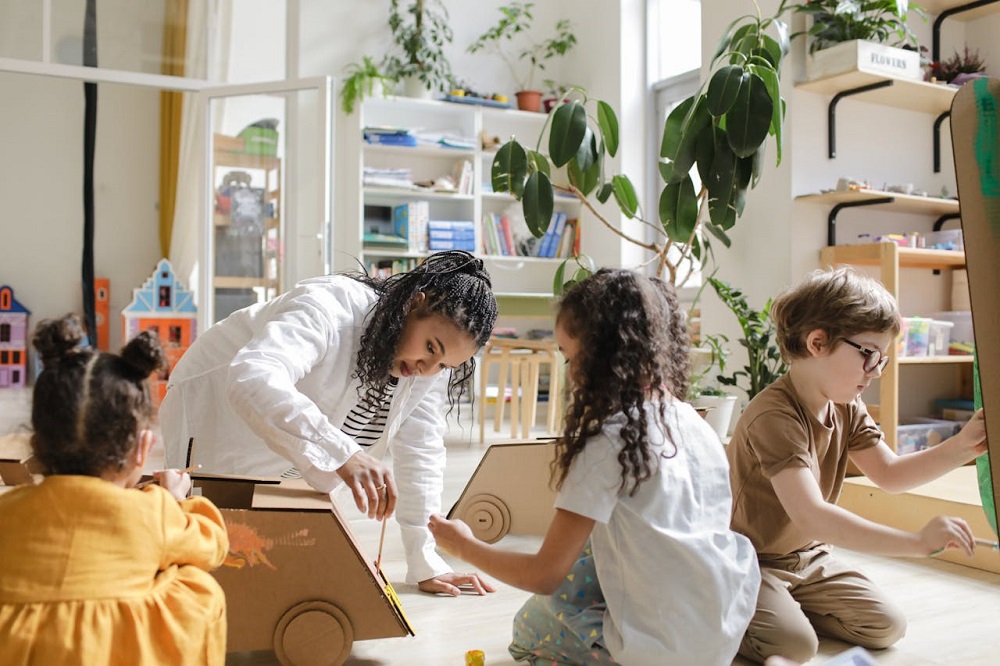
Educators who work with this age group know the pattern. Put twelve preschoolers in a room with one activity and you get clusters, dominance, withdrawal, and four children who never touch the materials at all. Break the same group into smaller units and the dynamic shifts immediately. Children who were quiet become leaders. Children who were taking over step back and start collaborating. The activity itself — the same one — produces different outcomes because the group size changed.
This is the core argument behind small group activities for preschoolers, and it's not a new idea. But it's also one that gets applied unevenly outside of classroom environments, where parents and caregivers often don't have the physical setup or the structured time to make it work consistently. In Los Angeles specifically, where family schedules are dense and the search for reliable, repeatable activities with young children is ongoing, the question of what actually functions in a small group setting — and where to go to make it happen — is worth looking at carefully.
Small Group Activities for Preschoolers and the Logic Behind the Group Size
Research in early childhood education consistently shows that small group interactions provide preschoolers with more opportunities for language use, increased participation, and direct feedback from peers and adults. The National Association for the Education of Young Children has found that children in smaller groups display higher engagement, longer attention spans, and more advanced problem-solving than in large group settings.
Small group activities for preschoolers work because the child's nervous system can process the environment at that scale. Three to five children is a social field a four-year-old can actually read — who is doing what, what the rules seem to be, whether it's safe to try something new. More than that and the reading becomes overloaded. The child defaults to either withdrawal or imitation rather than genuine exploration.
For families in Los Angeles organizing playdates, small birthday gatherings, or other structured activities for preschoolers, these developmental principles have practical implications. Physical space, activity structure, and group age composition must all be considered. Focusing on only one factor often leads to less effective outcomes.
The play spaces that work for small group preschool activities are the ones designed around variation — zones that offer different scales, different challenge levels, different sensory inputs — so that a group of four or five children doesn't all converge on the same thing simultaneously. When children can spread out slightly and then come back together, the small group dynamic actually functions the way developmental research suggests it should.
Ideas for Small Group Activities for Preschoolers That Use Physical Space Well
The activity ideas that get passed around in parent communities — sensory bins, color sorting, simple building projects — are genuinely useful in the right context. But they share a constraint: they require setup, they require the right materials in the right quantity, and they work better with three children than with six, which means you're constantly recalibrating based on who showed up.
Ideas for small group activities for preschoolers that use physical space as the primary variable rather than materials tend to be more flexible. Climbing structures that offer multiple entry and exit points. Surfaces at different heights. Enclosed and open areas alternating so children can choose between visible-to-everyone movement and quieter, more private exploration.
For this reason, indoor play environments with zone-based designs are frequently recommended by early childhood educators for group outings and birthday events. The space itself creates differentiation. When five preschoolers have five activities available, they do not require a teacher-directed rotation. Children naturally split and regroup without adult intervention.
In Los Angeles, where the weather often eliminates outdoor small group play options during peak summer heat or during the occasional rainy stretch, indoor environments absorb this function reliably. The families in LA who find a play space that handles small groups well tend to build it into their rotation rather than treating it as a one-off outing. You can see the pattern in how parents describe their visits — not "we went there once" but "we go there regularly."
Small Group Ideas for Preschool When the Setting Has to Do Some of the Work
Not every small group play session is teacher-led. Not every caregiver has the bandwidth to direct five preschoolers through a structured activity for ninety minutes. The most honest version of small group ideas for preschool accounts for this reality — the adult in the room needs to be able to observe and support without actively running the experience every minute.
Small group ideas preschool educators and parents come back to are the ones where the environment provides the structure. The activity doesn't need explaining. The children can figure out what to do within thirty seconds of arriving. And when one thing gets boring — or finished, or disputed — there's an adjacent option that doesn't require adult redirection.
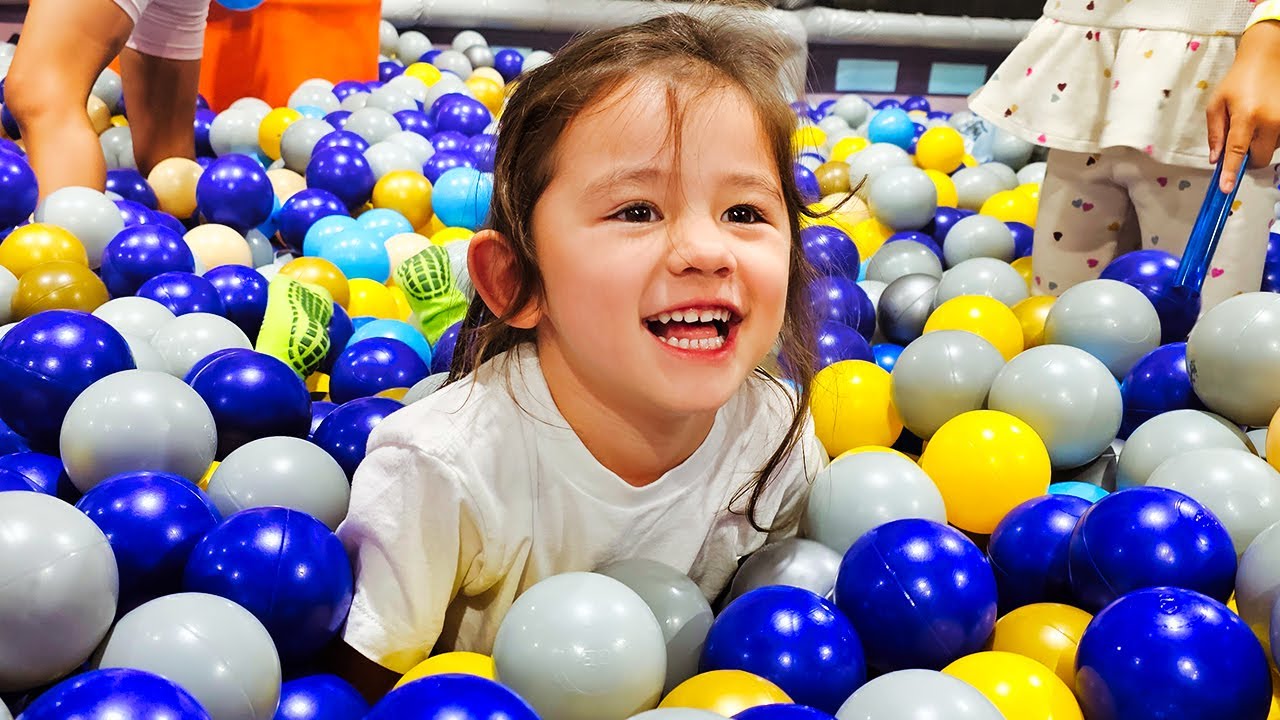
Fun Play World's play area on West Pico Boulevard in Los Angeles is designed around exactly this. Multiple zones on different levels. Climbing that scales by difficulty rather than age category. The slide that comes off the main structure in a way that reliably produces a line of three children waiting their turn — which is itself a small social exercise, the management of waiting, the negotiation of who goes next. These micro-interactions are where a significant portion of preschool social development happens, and they emerge without adult instruction when the space is built to create them.
We've noticed, watching small groups come through, that the first five minutes in this space look different from the first five minutes in a single-room play area. Children orient quickly. Nobody stands at the edge deciding whether to enter. They move toward something — usually whatever the nearest other child has already found interesting — and the small group dynamic begins assembling itself.
Small Group Activity for Preschool That Bridges Multiple Ages at Once
One of the persistent challenges in planning a small group activity for preschool-age children is the age range within that developmental window. A group of "preschoolers" might include children from eighteen months through five years old — a developmental span that, in any other context, would be treated as entirely different populations.
Small group activities for preschoolers are most effective when the environment supports a range of ages without needing separate programs. The zone structure at Fun Play World addresses this directly. Toddlers under two can safely explore lower areas, while three- and four-year-olds are drawn to mid-level structures suited to their abilities. Five- and six-year-olds use the upper sections, providing developmental modeling for younger children who observe with interest.
The Santa Monica location at 828 Pico Blvd runs the same zone-based layout, which is particularly relevant for families in the westside neighborhoods where the preschool-age population is high and the local small group play options are more limited than the density might suggest. A group of Santa Monica families arranging a joint playdate or small birthday party for mixed-age preschoolers can use this space without having to separate children into different areas or activities.
Preschool small group activities for preschoolers that genuinely work across a two-to-five age range are rare enough that parents mention it specifically when they find them. The layout here isn't just child-safe — it's child-readable at multiple developmental levels simultaneously.
Small Group Activities for Preschoolers Ideas Beyond the Standard Craft Table
The craft table is reliable. It has a fixed location, predictable materials, a clear start and end point. Preschool small group activities ideas that appear in most parenting resources are heavily weighted toward craft formats because they're containable — you can run them in a kitchen, they clean up, they produce a takeaway item the child can show someone later.
But craft activities have a ceiling for movement, for social interaction, and for the kind of physical play that children's bodies genuinely need. The CDC's guidance on young children's physical activity points to the importance of active play for development across motor, cognitive, and social domains — not as a supplement to sedentary activities but as a primary mode. Small group activities for preschoolers ideas that include substantial physical movement produce different outcomes than purely table-based options, and parents who've experienced both tend to describe the physical play sessions as the ones that change the rest of the day in a measurable way.
Activities for small group preschoolers at an indoor playground deliver the movement variable without the outdoor logistics. No sunscreen calculation, no weather contingency, no surface condition to worry about. The space is consistent. The floor is soft. And the transition from arrival to active play is almost immediate — there's no setup period where adults are assembling materials while children are already restless.
For LA families who rotate through activities trying to find what actually holds a group of three-year-olds for a full afternoon, the combination of physical engagement, zone variety, and social self-organization that a well-designed indoor play space provides is genuinely hard to replicate at home or in a park setting.
Why This Space Handles Small Groups Differently
The question parents often ask — implicitly, through the choices they make — is whether a venue is designed for groups or whether it's designed for individuals and simply tolerates groups. The distinction shows up quickly.
A well-designed group space features seating that faces the play area, sufficient zone variation so children do not need to wait for equipment, and staff who are supportive yet unobtrusive. Cleanliness is prioritized for actual use, ensuring a safe environment for all children.
Fun Play World in Los Angeles sits in the first category. Birthday package bookings make the group dynamic explicit — private party room, dedicated session time, team coordination — but the open play format handles small groups just as well for families who want the experience without the event structure. Walk-in sessions run throughout the week. Weekdays from 10 AM, Sundays from 9 AM. First child is $35 for two hours, second sibling $25, third $20. Two adults included per family.
The Santa Monica location carries the same design logic. Same zone layout, same session pricing, same approach to how groups of children move through the space. For westside families who've been running the same rotation of playdate options since their children were born, this is worth knowing.
The Birthday Connection That Follows Small Group Visits
Parents who bring a small group of children to Fun Play World for a regular playdate visit tend to notice something specific about the space from a birthday planning perspective. The party room is separate. The transition from play to gathering is natural. The scale — twenty children maximum at the larger packages — matches exactly the small-group format that makes children's birthday parties actually work rather than descend into chaos.
Birthday packages range from $1,800 for Basic to $5,700 for VIP, with intermediate options at $2,300 and $2,700. Each package adjusts guest count, catering, and service coverage. An 18% service fee covers setup, coordination, and breakdown. A 40% deposit secures the date, with the balance due five days before the event. Families who visit regularly before booking a birthday find that familiarity improves the experience for both children and adults.
FAQ
-
The space accommodates various group sizes, but the optimal range is three to six children, where the developmental benefits of the zone layout are most evident. Children self-organize, resolve disputes independently, and each child enjoys meaningful time on every structure. Groups larger than ten are better suited to the birthday party format, which includes a dedicated room and staff support.
-
The zone layout accommodates a broad developmental range from toddler through early elementary. The lower zones are designed to be accessible and engaging for children under two. The upper sections provide enough challenge for children five and older who want to test themselves. Mixed-age small groups — which is the norm for most family playdates — navigate the space without needing to separate by age.
-
Birthday parties use a separate party room in addition to the play area. The party has a structure — active play, transition to the room, cake and food, return to play if time allows — that doesn't require the hosting parent to manage the transition. The team handles setup before the family arrives and breakdown after. For a small group of eight to twelve children, the Basic or Adventure package gives the right scope without overbuilding the event.
-
A monthly membership is available at $200 and covers the family's Open Play sessions across the month. For families who find themselves bringing a small group of children on a regular basis through the week — playdate rotations, after-preschool visits, weekend morning outings — the membership math works out significantly better than per-session pricing.
-
Non-slip socks are required for everyone entering the play area. They're available for purchase at the venue for families who forget — which is common enough that it causes no disruption. Beyond that, the visit is low-prep. The space handles the activity; families bring the children and themselves