
Physical Activities for Preschoolers in Los Angeles - the Thing Parents Keep Getting Told and Then Struggling to Actually Do
The challenge isn't knowing that movement matters. It's the logistics of actually providing it, consistently, across a week that doesn't always have good weather or accessible outdoor space. In Los Angeles, the outdoor options are real and generally good - but not always practical. Traffic, heat, the specific geography of getting somewhere with a small child, the afternoons when the park just isn't working - all of it creates a gap between what the guidelines recommend and what parents can actually pull off on a given day.
Indoor physical activities for preschoolers that are genuinely physical - not crafts, not quiet sensory play, but actual movement - are the piece that fills that gap when the outdoor option falls through. Fun Play World operates two locations built exactly for this: 10672 West Pico Blvd in Los Angeles and 828 Pico Blvd Suite 4 in Santa Monica.
Indoor Physical Activities for Preschoolers - Why the Venue Matters More Than Most Parents Realize
Not all indoor options are physically equivalent. A children's museum is enriching but not primarily physical. A library story time is valuable but doesn't cover the movement component. Even many indoor play venues in la underdeliver on actual physical engagement because the equipment is designed more for visual stimulation than for the kind of full-body motion that three-to-five-year-olds genuinely need.
Indoor physical activities for preschoolers that meet movement needs require structures for climbing, jumping, running, balancing, and repetitive motor sequences. The body learns through repetition at this age. A child who climbs the same netting section twelve times in a row is doing something developmentally specific, not just passing time. Each pass is slightly faster and more confident, building proprioceptive awareness and upper-body strength simultaneously. This does not happen in front of an exhibit or during a craft session.
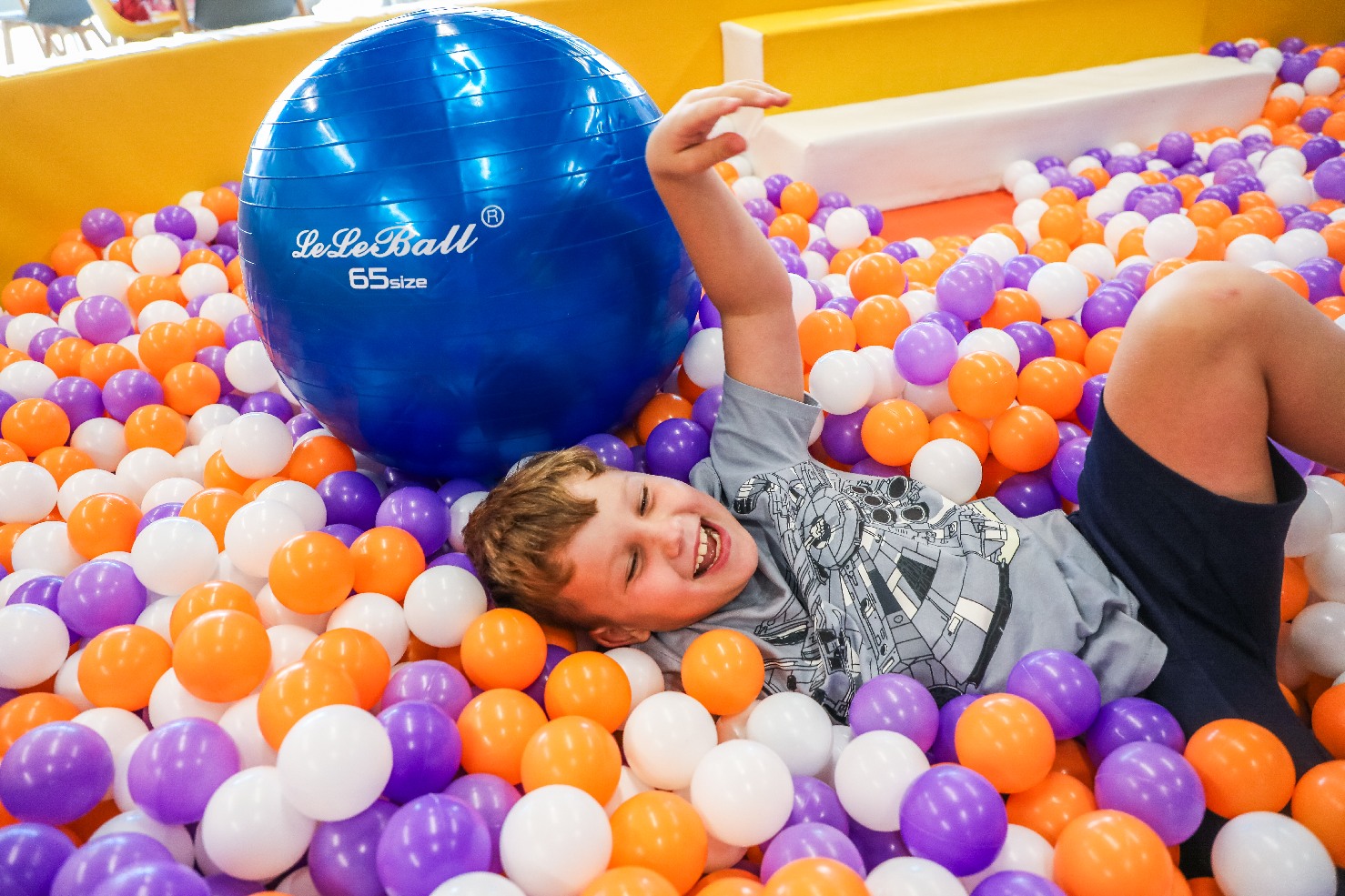
Fun Play World's facilities are physically rich in a way that serves this developmental reality. Climbing structures with varying heights and hold configurations. Trampolines - real ones, sized for small bodies, with appropriate bounce characteristics. Slides with genuine length and speed. A ball pit that requires physical work to move through. A maze with tunnels at preschooler height that demands crawling, lateral movement, and directional decision-making. These aren't decorative. They're physical tools that happen to be shaped like fun.
Benefits of Physical Activity for Preschoolers - What Actually Happens in the Body
The benefits of physical activity for preschoolers go well past the obvious "tires them out" logic that most parents work from, though that's real too and not nothing. The research is fairly consistent on a few specific things: regular movement at this age supports the development of fundamental motor skills that become the foundation for sports, coordination, and physical confidence in later childhood. Children who get consistent physical activity in the preschool years tend to demonstrate better attention spans in structured settings - not because movement is a reward for sitting still, but because physical activity supports neurological development in the prefrontal cortex, the part of the brain responsible for focus and impulse regulation.
Sleep is the other one. A preschooler who has spent two hours in genuine physical engagement sleeps differently than one who has been in front of a screen for two hours - anyone who has done both knows this from experience before the research confirms it. Why is physical activity important for preschoolers beyond the immediate effects? Because the habits form early. Children who are accustomed to physical engagement as a normal part of their day are more likely to maintain those patterns through childhood and adolescence. The four-year-old who climbs confidently becomes the eight-year-old who tries out for the team without the anxiety of physical self-doubt.

Inside Physical Activities for Preschoolers - the Gap Between What's Available and What Works
Indoor physical activities for preschoolers in Los Angeles fall into a few categories. Formal gymnastics and movement classes support structured skill development but require scheduled commitment. Parks and outdoor spaces are ideal but depend on weather. Indoor climbing gyms exist but are usually designed for older children and adults. The specific gap is a place where three-to-five-year-olds can arrive, move freely for an extended time without parent-managed facilitation, and leave genuinely tired in the right way.
Fun Play World fits this gap specifically. The unstructured play format - no class, no schedule, no rotation - means the child decides what to do and when. Parents accompany and watch, but aren't running the activity. The physical engagement happens because the space makes it happen, not because someone is directing it. This is an important distinction for the developmental value of the movement. Free play physical activity builds different skills than instructed physical activity. Both have value, but the free-form version is harder to find in a properly equipped environment.
Watching children use the climbing area at Fun Play World, we noticed the repeating pattern happens almost automatically. A child finishes the slide, loops back to the ladder, and climbs again. No one asks them to. The structure itself creates the repetition loop that generates developmental benefit. This is what well-designed physical play equipment does when calibrated correctly for the age group.
Fun Physical Activities for Preschoolers - What the Space Feels Like When You Walk In
The layout at the Los Angeles location on West Pico Blvd and the Santa Monica location on Pico Blvd are both designed with a specific spatial logic: multiple physical zones that a child can move between without adult direction, sized so that a four-year-old can see from one zone to the next and make a choice about where to go. The color, the scale, the surface textures - all calibrated for the age group rather than borrowed from an adult gym context.
Fun physical activities for preschoolers that actually land - that produce the absorption and focus that parents are hoping for - tend to involve sensory richness alongside the physical demand. The sound of the ball pit, the specific spring sensation of the trampoline, the texture of the climbing holds under small hands. These aren't just fun - they're proprioceptive input, tactile stimulation, the kind of full-sensory engagement that this age group needs and often doesn't get from screen-based or sedentary indoor time.
The facility is kept in the condition that supports physical safety and engagement simultaneously. New equipment. Clean surfaces. The grip sock policy - required for everyone entering the play area - maintains the floor integrity and prevents the slide surface degradation that makes older equipment feel flat. Parents in Yelp reviews return to the cleanliness consistently, not as a luxury detail but as a reason they feel comfortable letting their child move freely without the background monitoring that less well-maintained venues require.
Open play is $35 for two hours for the first child. Second sibling is $25, third sibling $20. Two adults per family are included in the admission. The monthly membership at $200 is what frequent visitors use - families who've made one of the LA or Santa Monica locations a regular weekly stop through the year.
Creative Physical Activities for Preschoolers - Movement That Also Engages the Imagination
Physical activity and imaginative play aren't separate categories for preschoolers. They run together. The child climbing the netting isn't just climbing - they're a pirate in the rigging, a mountain explorer, an astronaut in zero gravity, depending on what they've decided the space is today. Creative physical activities for preschoolers that allow this imaginative overlay while providing genuine physical demand are the ones children return to with enthusiasm rather than treating as obligatory exercise.
The maze at Fun Play World is a good example. From a developmental standpoint, it's spatial navigation, directional reasoning, and coordinated crawling - serious physical and cognitive work. From the child's perspective, it's an adventure with unknown territory. Both things are true simultaneously, and neither cancels the other out. The physical activity for preschoolers ideas that work best across repeated visits tend to have this layered quality - physical at the base, imaginative on top, with enough variety in the physical layer that the imaginative overlay keeps finding new material.
Birthday celebrations at Fun Play World fold this into the party format. The physical environment is the entertainment. Children move through the same play structures they use during open play, but with the social charge of a group that includes their specific friends, a birthday child at the center, and the heightened energy that comes with an occasion. The birthday packages handle the logistics - helpers, food, drinks - while the space handles the physical activity without anyone having to organize a game or run a program.
Recommended Physical Activity for Preschoolers - the Case for a Regular Indoor Option
Health authorities describe recommended physical activity for preschoolers as: three hours total across the day, of which at least one hour should be energetic enough to cause heavy breathing or increased heart rate. That specific intensity threshold - the active portion - is the one that most indoor options don't reliably hit. Sedentary creative play, quiet sensory activities, and even most traditional children's museums don't produce that physiological response.
Indoor physical activities preschoolers can access that reliably hit the intensity level include trampolines, climbing structures, maze navigation, and ball-pit play - which is to say, the core features of Fun Play World's facilities at both the LA and Santa Monica locations. Two hours of open play at this venue, for a three-to-five-year-old, reliably produces the kind of physical output that corresponds to the recommended activity intensity. Not because the visit is organized as exercise, but because the equipment does what it's designed to do.
For families building a weekly structure in LA that includes reliable physical activity for their preschooler, a regular open play session - whether through individual visits or the monthly membership - covers the indoor physical activity component in a way that most available alternatives don't. The child moves. The parent is present but not managing. The developmental value is real. And the afternoon after a two-hour session at Fun Play World tends to go more smoothly than the one that follows a day spent mostly sitting.
Frequently Asked Questions
-
The widely accepted guideline from both the World Health Organization and the American Academy of Pediatrics recommends at least 180 minutes (three hours) of physical activity per day for children aged three to five, spread throughout the day rather than concentrated in one session. Of that, at least 60 minutes should be what researchers call "energetic play" - movement vigorous enough to increase heart rate and breathing. A two-hour open play session at Fun Play World covers a significant portion of that daily target.
-
For most three-to-five-year-olds, two hours is the right duration - enough time to rotate through the different play zones multiple times without the fatigue or overwhelm that can arrive later in longer sessions. The two-hour open play format is what most families use, though birthday packages run two or three hours depending on the package level. The facility doesn't offer re-entry on the same day, so planning to use the two-hour window intentionally is the approach most families take.
-
The primary difference is structure and weather independence. A park offers open space but limited directed physical challenge for this age group: swings, a climbing frame, and open running area. Fun Play World provides a layered physical environment: climbing, trampolines, maze navigation, ball pit, and slides. This creates higher physical engagement density within the same time. The indoor environment also removes weather as a variable, which matters for families seeking a reliable physical activity option year-round in LA.
-
The birthday packages reserve the play space for the party group during the event, so children use the same climbing structures, trampolines, and maze areas as during open play. Physical activity is the party entertainment, not separate from it. Packages start at $1,800 (Basic), then $2,300 (Adventure, with food and helpers), $2,700 (Ultimate, three hours, larger guest count), and $5,700 (VIP, full catering, custom cake, themed setup). An 18% service fee applies to all events.
-
Yes - both locations have the same core play structures and run on the same open play and membership model. The Santa Monica location at 828 Pico Blvd Suite 4 is accessible for families in the beach-adjacent neighborhoods of the Westside who find the Los Angeles location less convenient. Membership works across both locations.