
Museum of Tolerance Los Angeles Review — What a Visit Looks Like When You Bring the Whole Family
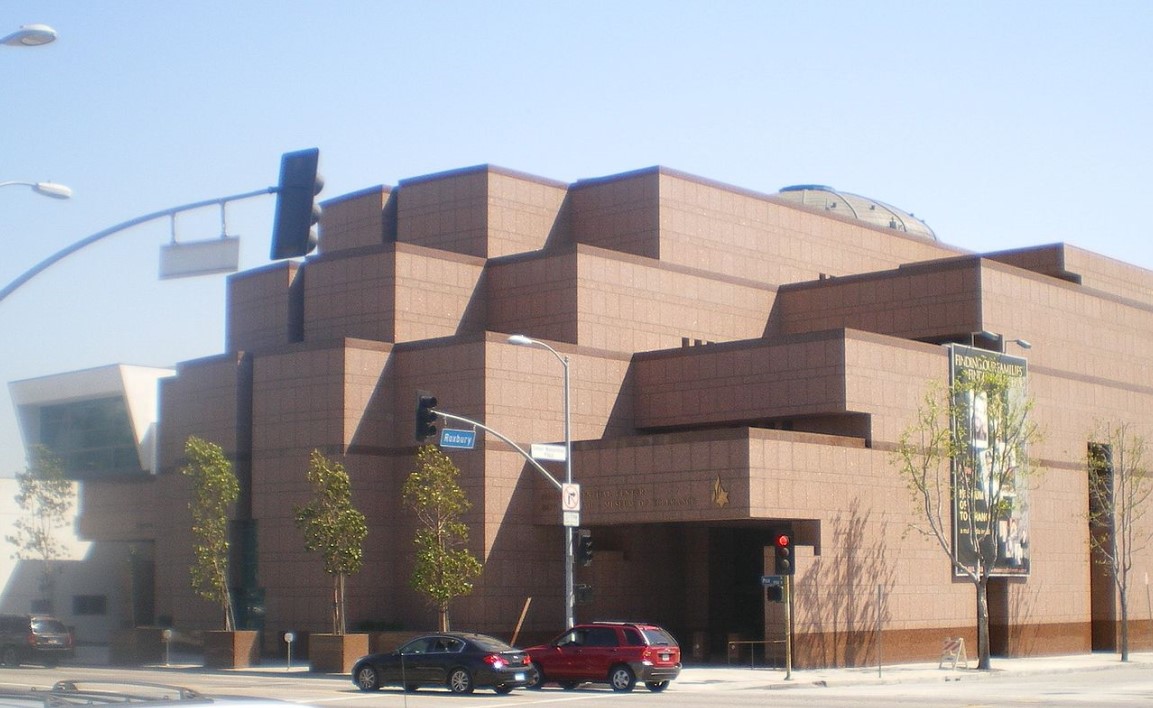
This is that review. Honest, from the family side, covering the exhibits, the logistics, and the part of the day that comes after.
What the Museum of Tolerance in Los Angeles Actually Is
The museum of tolerance in los angeles is a multimedia institution dedicated to exploring prejudice, racism, and the history of the Holocaust. It was founded in 1993 by the Simon Wiesenthal Center, named for the Holocaust survivor and Nazi hunter whose name carries enormous moral authority. Wiesenthal himself, who passed away in 2005, spent decades tracking escaped Nazi war criminals and advocating for remembrance. The institution he inspired sits on Pico Boulevard in the Pico-Robertson neighborhood — one of the most densely Jewish communities in the United States — and its presence in that specific neighborhood is not incidental.
The museum offers more than just one exhibit. It has three main areas to explore. The Holocaust Exhibit is a guided tour that covers the years from the 1920s to 1945. The Social Lab looks at current issues like prejudice, bias, and social justice. The Anne Frank Exhibit lets you experience her life and legacy in depth. There is an extra charge for the Anne Frank Exhibit. Each area has its own pace, emotional tone, and level of accessibility for children.
Worth knowing before you go: as of July 2025, the Holocaust Exhibit has temporarily closed for technology updates and improvements. The Social Lab and Anne Frank Exhibit remain fully open. If the Holocaust Exhibit is the specific reason for your visit, confirming its reopening date before purchasing tickets is the practical move.
Finding the Museum of Tolerance on West Pico Boulevard Los Angeles CA
The museum of tolerance west pico boulevard los angeles ca address is 9786 W Pico Blvd — a stretch of road that most Angelenos know as one of the main commercial arteries through the westside Jewish community. It sits at the southeast corner of W Pico Blvd and S Roxbury Drive. If you're driving, the entry to the underground parking is directly accessible from Pico Boulevard, and the parking is free for museum visitors. That's worth knowing because free parking anywhere in Los Angeles is notable enough to affect a family's decision about where to go.
The building itself is large and sits back from the street in a way that doesn't fully communicate its scale from outside. First-time visitors often comment on how much there is once you're in. Plan for two to three hours minimum for the Social Lab and Anne exhibit combination. If the Holocaust Exhibit is open during your visit, add another 90 minutes — it's a timed, guided presentation that doesn't allow self-pacing.
The Pico-Robertson neighborhood around the museum is worth spending time in. Kosher restaurants, bakeries, community institutions — the street has a texture that families visiting for educational purposes will find contextually meaningful. There are also picnic areas at Roxbury Park, just a short walk from the museum, which is useful for families who need to decompress outside before the next part of the day.
Museum of Tolerance Los Angeles Tickets and the Timed Entry System
Museum of tolerance los angeles tickets need to be purchased — and in most cases, booked in advance rather than picked up at the door. The museum operates a timed-entry system, particularly for the Holocaust Exhibit, which means showing up without a reservation can mean missing the next available slot by hours. For families on a schedule, pre-booking is not optional.
Admission is tiered: adults, students, seniors, and children each carry different prices. Active military admission is free, as is entry for members. The Anne exhibit carries an additional fee on top of general admission regardless of your ticket type. There are also occasional Groupon and discount offers that circulate, though these typically require advance reservation like any other ticket and won't let you simply walk in at will.
Honestly, the timed system — once you accept it — is actually part of what makes the experience work. The Holocaust Exhibit in particular is not the kind of thing that benefits from being rushed through at your own pace alongside a large, unsynchronized crowd. The guided format holds the group together through the material in a way that feels right for the content. You're moving through something that deserves time. The timed entry respects that.
Hours, Saturdays, and the Holiday Schedule Families Miss
Museum hours — specifically the closed Saturdays — is the detail that catches families off guard more often than anything else about this museum. The museum is closed on Saturdays in observance of Shabbat, as well as on most major Jewish holidays. In a neighborhood with this density of Jewish observance, that closure is expected and makes sense. But families planning a weekend trip often discover it the hard way.
The museum is open for visitors Monday to Thursday from 10 AM to 3:30 PM, and on Sundays from 10AM to 5 PM. Friday hours change with the season, so it’s best to check ahead because they may close early for Shabbat. The longer Sunday hours are helpful for families who can’t come during the week.
The early weekday closing time of 3:30 PM means you need to plan a visit. If you arrive at noon, you’ll have only three hours, but this time is usually enough for families with younger children. Older kids not often want to spend more time and also prefer to interact somewhere else. Weekday mornings are quieter before school groups arrive and are usually the best time to visit.
Inside the Museum of Tolerance in LA — What the Exhibits Actually Feel Like
The museum of tolerance in la is not a quiet place to walk through at your own pace. That's not a criticism. It's a description. The Social Lab, in particular, is built around interaction and provocation in the best sense — you're confronted with scenarios, statistics, and choices that require you to engage rather than observe. There are screens, physical installations, and discussion prompts. It's the kind of exhibit that produces conversation between adults and children rather than a one-way absorption of information.
The Anne Frank Exhibit is more intimate. The physical recreation of the annex space, the reproduced diary pages, the documentation of her family's story — it lands differently than reading about it in a book. I watched a family with two children, probably eight and eleven, moving through this section slowly. The eight-year-old kept coming back to a single photograph. She didn't say anything. She just looked at it several times and then moved on. That's the kind of moment this exhibit produces, and you can't manufacture it with a worksheet or a homework assignment.
The Anne exhibit also includes an immersive film experience narrated by actress Hailee Steinfeld, which runs approximately an hour and holds children's attention in a way that the slower archival sections sometimes don't. For families with children on the younger end of the appropriate age range — around ten or eleven — the film is often the piece that lands most concretely.
What the Museum of Tolerance Los Angeles Gets Right for School-Age Children
Museum of tolerance los angeles handles children's visits better than most institutions dealing with heavy historical content. The approach to the material is not gratuitous. You won't encounter graphic imagery at every turn the way some European Holocaust memorials present it. The museum's philosophy, consistent with Wiesenthal's own emphasis on education over shock, leans toward testimony and narrative rather than raw documentation.
This makes the question of appropriate age more answerable than it might seem. Most educators and child psychologists suggest ten as the rough minimum for the Holocaust-specific content, though individual children vary widely. The Social Lab is generally accessible to younger children — its focus on contemporary prejudice, bullying, and bias is framed in ways that eight- and nine-year-olds can engage with meaningfully. For families with mixed ages, splitting the visit — younger children in the Social Lab while older ones do the Anne exhibit — is a practical approach the staff is accustomed to accommodating.
The museum does a good job of keeping each section meaningful but not too long. The Holocaust Exhibit, when it reopens, will take about 90 minutes. The film in the Anne Frank Exhibit lasts about an hour. The time you spend in the Social Lab depends on how much you participate. Most people spend three to four hours for a full visit, which works well for school-age children who are ready for the emotional topics.
LA Museum of Tolerance and the Age Range That Actually Works
The la museum of tolerance is not designed for very young children. That's worth saying plainly rather than hedging around it. The content — Holocaust history, human rights abuses, systemic prejudice — requires a developmental capacity for abstract moral reasoning and for holding historical grief without being overwhelmed by it. Children under eight generally don't have that capacity reliably, and bringing a five-year-old through the Holocaust Exhibit is likely to produce trauma rather than learning.
For families with a wide age range — say, a seven-year-old and a twelve-year-old — the practical approach is planning the day so the older child gets the full museum experience while the younger one has somewhere else to go. That somewhere else matters. It can't be a parking lot or a lobby bench. It needs to be a place where a young child is genuinely engaged and cared for while the older child and parent complete the visit.
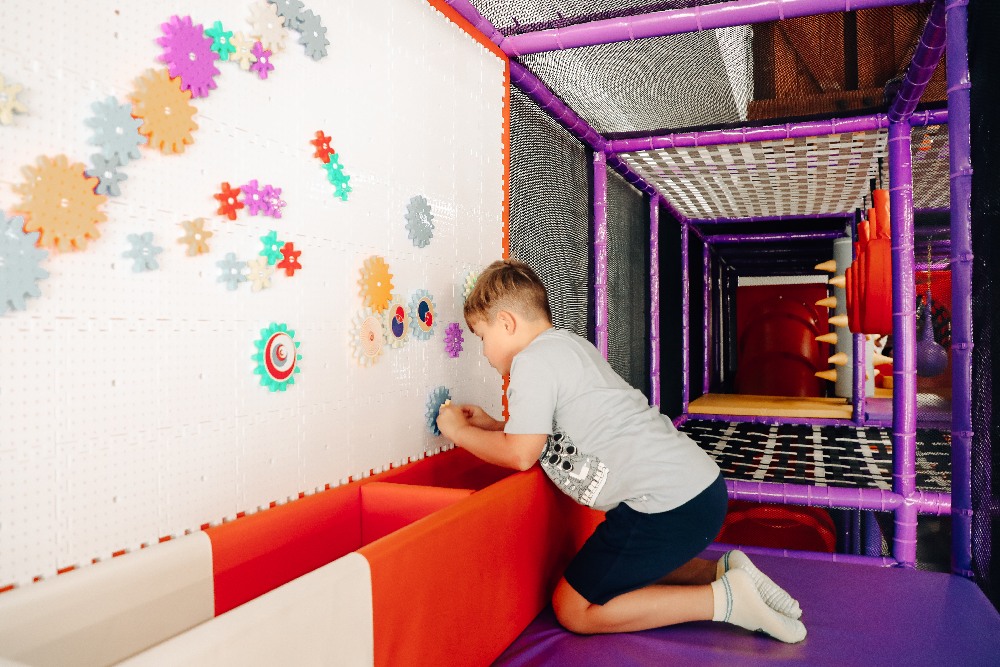
This is, honestly, one of the practical reasons Fun Play World at 10672 W Pico Blvd functions as a natural partner to the museum experience — not as marketing language, but as geography. The two spaces are on the same street, less than two minutes apart. A family where one parent takes the older child to the museum while the other brings the younger child to the play space, then reunites for lunch on Pico Boulevard, is a workable plan. We've heard versions of this from families who figured it out themselves.
Los Angeles Museum of Tolerance and the Emotional Weight of the Visit
The los angeles museum of tolerance asks something of adults too, not just children. The parents and grandparents who come here often carry their own connection to the history — family members who survived, family members who didn't, or simply the weight of belonging to a generation that received this history from living witnesses. Walking through the Anne Frank Exhibit with your own child, knowing what you know, produces a layering of emotion that is difficult to describe and impossible to prepare for entirely.
The museum handles this with quiet competence. The staff are trained for a range of visitor responses. There are spaces to pause. The pacing of the timed exhibits allows for moments of stillness without forcing them. And the architecture of the building — large, well-lit, with interior spaces that feel dignified rather than oppressive — gives visitors room to breathe between sections.
What I remember most clearly from my own visit with an eleven-year-old is the transition between exhibits. The physical movement from one space to the next. The brief corridor where you're neither inside one experience nor inside the next. How much the child needed that thirty seconds of nothing in particular. How much I did too.
After the Museum of Tolerance Los Angeles — What Comes Next in the Day
After a visit to the museum of tolerance los angeles, the afternoon lands differently than after other museum visits. Children who've engaged seriously with the material need time to process. Some go quiet. Some talk a lot. Some need to move — physically, urgently, in a way that is almost a physiological requirement after sitting and absorbing for two hours.
Physical play after a museum visit like this is not a departure from the day's meaning. It is part of how children metabolize what they've experienced. They need to return to their bodies. Running, climbing, the specific pleasure of a slide or a jumping challenge — these activities don't cancel the morning's weight. They give a child's nervous system a place to land after carrying something significant.
The Pico Boulevard corridor between the museum and the surrounding neighborhood has options. Roxbury Park is close for outdoor play when the weather allows. For families who want a reliable, indoor, all-weather option — or who have mixed ages with a toddler in tow — Fun Play World sits about a mile east on the same street.
Museum of Tolerance LA and Where the Pico Boulevard Block Leads After You Leave
Museum of tolerance la is one part of what Pico Boulevard is in Los Angeles. This stretch of road carries the neighborhood's Jewish community history, its restaurants, its bookstores, its community institutions — and its new additions, including family-oriented venues that didn't exist a decade ago.
Fun Play World at 10672 W Pico Blvd has become a natural part of this corridor for families who visit the neighborhood for the museum and then need somewhere the children can play. The indoor playground runs Open Play on weekdays from 10 AM and Sundays from 9 AM. First child is $35 for a two-hour session, $25 for a second sibling, $20 for a third. Two adults per family are included. The space is zone-based, climate controlled, and maintained throughout the session — which matters for families arriving after an emotionally demanding morning.
You can also host birthday parties at Fun Play World. Packages start at $1,800 for Basic, $2,300 for Adventure, $2,700 for Ultimate, and $5,700 for VIP. The staff takes care of setup, and higher packages include catering and cleanup. If you want to book a party after your visit, you can reserve your date with a 40% deposit.
The day that starts at the museum and ends on a play structure, with lunch somewhere on Pico Boulevard in between, is a specific kind of Los Angeles family afternoon — heavy where it should be heavy, light where the children need it to be light, and anchored the whole time to a neighborhood that holds both things without contradiction.
FAQ
-
The Social Lab exhibit, which focuses on contemporary prejudice and bias, is generally accessible to children eight and older with appropriate context provided by parents beforehand. The Holocaust Exhibit and Anne Frank Exhibit are typically recommended for children ten and up. The museum's education staff can advise on programming for specific ages and school groups. Confirming what's currently open before visiting is important given the current temporary closure of the Holocaust Exhibit.
-
Pre-booking is strongly recommended and in practice often required for the timed-entry exhibits. Walking in without a reservation during busy periods can mean missing the next available slot by hours. Checking the museum's official reservation system before your planned visit date, particularly for the Anne Frank Exhibit and for group visits, is the reliable approach.
-
The museum is closed on Saturdays for Shabbat and on major Jewish holidays. Weekday hours are Monday through Thursday from 10 AM to 3:30 PM, and Sundays until 5 PM. Friday hours change with the season. It’s a good idea to check the schedule before you visit in case there are holiday closures or other changes.
-
Free underground parking is available for museum visitors, accessible from Pico Boulevard. The lot is a significant practical advantage for families driving in, since street parking in the surrounding neighborhood is limited and subject to restrictions.
-
The age split — younger children who aren't ready for the museum content alongside older children who are — is common enough that families have worked out practical solutions on the Pico Boulevard corridor. Splitting the group between the museum and a nearby activity, then reuniting for lunch, is the most manageable approach. Fun Play World at 10672 W Pico Blvd is close enough to make this logistics genuinely workable rather than theoretical.
-
Three to four hours covers the Social Lab and Anne Frank Exhibit thoroughly without rushing. If the Holocaust Exhibit has reopened, add another 90 minutes for that component. Plan for the children to need movement and recovery time afterward — the visit asks something of everyone who comes, and building in decompression time makes the afternoon work better than trying to move directly from the exit to a car.