Holocaust Remembrance Day Activities in Los Angeles and the Question of What Children Need After
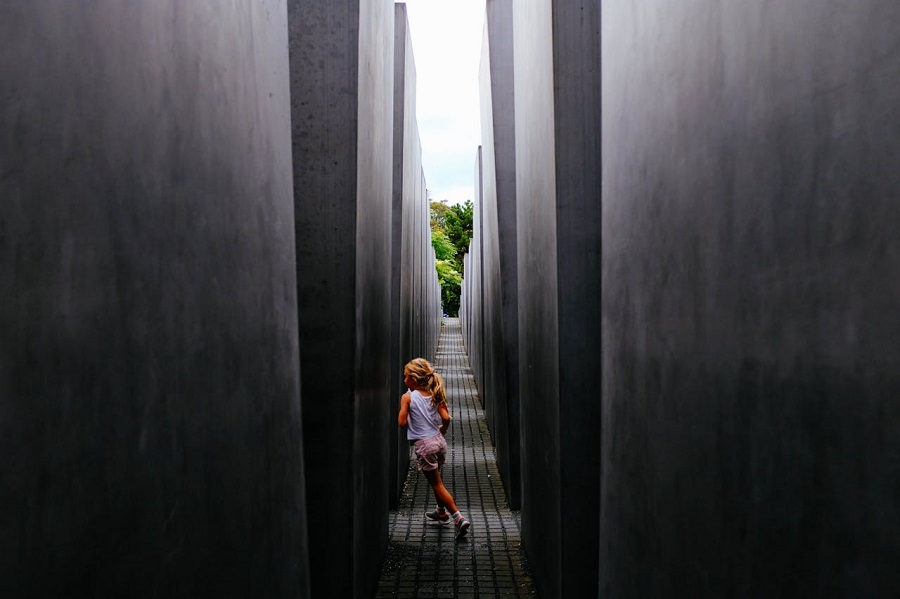
How you spend Holocaust Remembrance Day with children in your family is one of the harder questions of the Jewish calendar. Not because the answer is contested — remembrance matters, the obligation to bear witness is real — but because children receive history differently than adults do. They need entry points. Concrete details. Stories with faces. And at a certain age, they need the weight of the day balanced with something that reminds them, physically, that life continues. That joy is not a betrayal of memory. That running and laughing and being fully, noisily alive is — in its own way — the answer the day is asking for.
This article is about both parts of that. The memorial side and the human side. What to do in Los Angeles on Yom HaShoah, how to bring children into the day's meaning without overwhelming them, and why the afternoon matters as much as the morning.
Holocaust Remembrance Day Activities That Work for Families With Young Children
The challenge with holocaust remembrance day activities for families is finding the register that fits the age in front of you. A five-year-old and a twelve-year-old are not having the same experience of the day, and they shouldn't be expected to. The activities that work are the ones calibrated to what a child can actually hold.
For younger children — preschool through early elementary — the entry points are almost always through story and face. Not statistics. Numbers are abstract; a child's mind slides off them. But a name, a photograph, a single story about a child who liked to draw or run or kept a cat — that lands. The USC Shoah Foundation's Visual History Archive has produced age-appropriate materials for educators and families, and the Museum of Tolerance in Los Angeles has designed portions of its programming specifically for younger visitors. The interactive and visual approach they take acknowledges that children need to walk through history rather than read about it.
Candle lighting — a yahrzeit candle at home, or participation in a community ceremony — is accessible to children from a young age. The act of lighting and standing near a flame, of saying a name aloud, gives children a physical ritual to hold onto. They remember the candle. They remember what you said while you lit it. That memory is the beginning of transmission.
For older children — middle school and up — the approach can expand into first-person testimony, documentary film, and direct engagement with the historical record. The Los Angeles Museum of the Holocaust in Pan Pacific Park is specifically designed for deeper engagement at this level, and the guided tours for school groups and families are built around testimony rather than chronology alone. You hear voices. That's different from reading dates.
But all of this — the morning, the ceremony, the visit, the conversation — asks something of children. And families who've spent a full Yom HaShoah day with young kids know how the afternoon can tip. Quiet. Heavy. A kind of stillness that is actually exhaustion wearing a different coat. What children need in that moment is permission to be children again. Not to forget — never to forget — but to run, to play, to laugh the specific laugh that only happens when the body is moving and the mind is fully in the present.
That is not a small thing. To me, it might be the most important part of how the day ends.
Things To Do on Holocaust Remembrance Day in Los Angeles Before the Evening
Things to do on holocaust remembrance day in Los Angeles cluster in certain parts of the city, and the distribution reflects where the community is concentrated.
The Museum of Tolerance on Pico Boulevard in Los Angeles is the most visited institution in the city for Yom HaShoah programming. It sits in a neighborhood with deep Jewish history — the Pico-Robertson corridor, which has anchored the Orthodox and broader Jewish community in LA for decades. Admission varies; programming on and around Yom HaShoah often includes specific exhibits, survivor testimony events, and guided experiences designed for family groups. Reservations fill early in the weeks leading up to the observance.
The Los Angeles Museum of the Holocaust in Pan Pacific Park offers free admission and is the oldest Holocaust museum in the United States. The exhibits are designed around artifacts and testimony in a way that makes them accessible to a broad age range. The museum's relationship with the LA community is longstanding; many families have been bringing children there for multiple generations. It is smaller and more intimate than the Museum of Tolerance, which is either a limitation or an asset depending on what you're looking for and who you're bringing.
Community memorial services run through synagogues, JCCs, and Jewish community organizations throughout LA and Santa Monica on or near Yom HaShoah. Many are in the evening — the siren that sounds at 10 AM Israel time is observed in Israel itself, and community ceremonies in Los Angeles tend to gather in the evening around candle lighting, testimony, and prayer. Chabad centers, Reform congregations, and Conservative synagogues each approach the day's programming with different traditions but a shared commitment to the act of gathering.
For families searching what constitutes a yom hashoah event in their specific neighborhood, the Jewish Federation of Greater Los Angeles maintains a calendar of programming that spans the city. This is the most reliable way to find local options without driving across the basin.
Yom hashoah los angeles observances in 2025 follow the Hebrew calendar's 27th of Nisan, which places it in late April. The exact date shifts year to year on the civil calendar, so checking the Jewish calendar in advance each year is the practical move.
Yom HaShoah Activities for Kids and the Role of Story
Yom hashoah activities for kids work best when they don't try to compress the entire history into a single afternoon. The history is not compressible. What children can absorb is a specific story, told well, with enough detail to make it feel real — and then time to sit with it before the next thing comes.
Picture books designed for young readers have been among the most effective tools for this. "The Butterfly" by Pavel Friedman, written in a concentration camp — and the children's book inspired by the poetry of Theresienstadt children — opens the door for conversation that a textbook entry doesn't. Reading together, pausing, asking what your child understands and what they're wondering, takes fifteen minutes and leaves a residue that lasts.
For older children, finding a family connection — even a distant one — to the history makes the day more personal. Many Jewish families in Los Angeles trace roots through Eastern Europe, through communities that were largely destroyed. A great-grandparent's city. A surname that appears in records. This kind of personal genealogical investigation can become its own project, something a child comes back to over years rather than consuming all at once.
Yom hashoah activities that include the body — the candle, the walk, the ceremony where you stand and feel the weight of the room — are often the ones that carry furthest into a child's memory. Children don't remember lectures. They remember being present in a moment that felt significant. That's what community events and family rituals do that individual study can't.
Holocaust Remembrance Day Events in Los Angeles Across the City
The density of holocaust remembrance day events in a city like Los Angeles is worth noting. The Jewish population here is the second largest outside Israel, and the institutional infrastructure that has built up over generations is significant. Families who moved to LA from Europe after the war brought their histories with them, and their children and grandchildren have built museums, memorial programs, and educational institutions that exist nowhere else in the same concentration.
The community in Santa Monica and the westside more broadly has its own institutions and observances. Synagogues in Santa Monica run their own Yom HaShoah programming, often in partnership with the larger city-wide events. The distances in LA being what they are, families on the westside often prefer local observances to the cross-city drive — and the local versions are genuinely substantive rather than token.
Holocaust remembrance day los angeles brings together survivor testimony wherever and whenever it's still possible. The survivor generation is aging; many communities may have only a few years of living testimony remaining. Programs that bring survivors into classrooms and community spaces — run by organizations like the 1939 Club and others based in LA — are scheduled around Yom HaShoah and deserve priority when they appear on a family calendar. Children who hear a survivor speak directly are changed by it in a way that recorded testimony, powerful as it is, does not quite replicate.
La holocaust remembrance day observance for public schools varies by district. LAUSD has Holocaust education incorporated into the curriculum at multiple grade levels, and many schools run specific programming during the week of Yom HaShoah. For families who want to understand what their child's school is doing — or not doing — the week is a natural moment to make that inquiry.
What the Afternoon Holds
After the morning's weight, after the ceremony or the museum visit or the conversation that went places you didn't fully anticipate, there is an afternoon that needs somewhere to go.
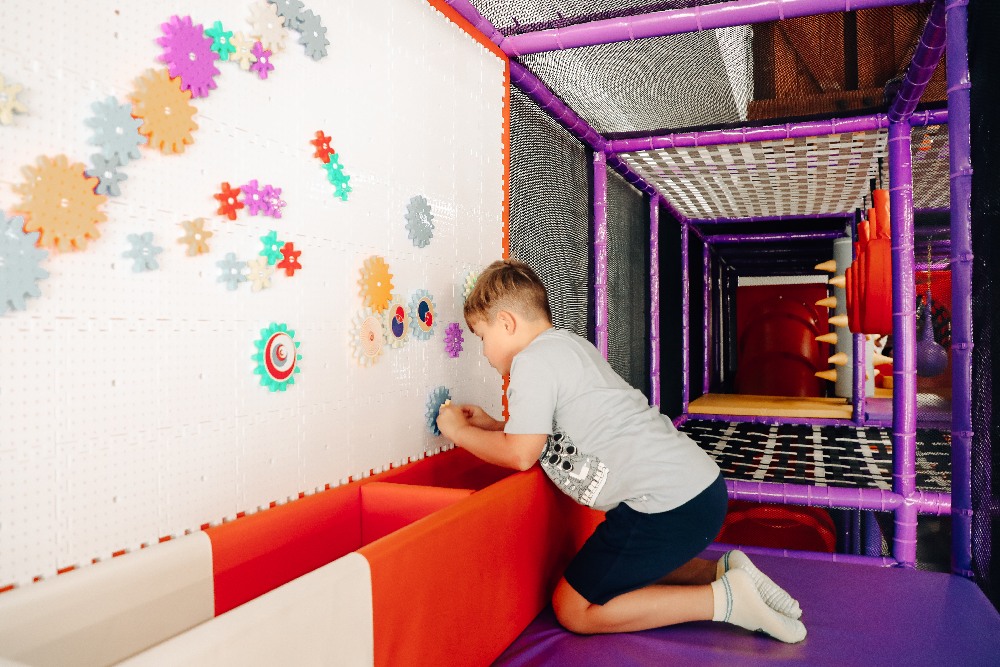
Children who have been present with heavy things need physical release. Not distraction — that's different. They need the kind of movement that returns them to their own bodies and their own lives. Running. Climbing. The specific pleasure of a slide that doesn't ask anything of you on the way down. The sound of other children, uncomplicated.
This is where Fun Play World at 10672 West Pico Blvd in Los Angeles becomes something other than a play space. For families who've spent a Yom HaShoah morning in serious, adult space — and who know that their children have carried more of that weight than they might have shown — the afternoon at an indoor playground is not a departure from the day's meaning. It is, if you think about it, a completion of it. The children are here. Alive. Loud. Getting up after they fall. Asking for one more turn. That is exactly what the day is meant to protect.
We've had families come in on Yom HaShoah afternoon — I noticed it, the particular mix of tiredness and relief that comes through the door. Kids who run straight to the structures without hesitation, parents who sit down with something that isn't quite a sigh but is close to one. The space holds them. It does what it does — it keeps children moving and gives adults a moment where they aren't managing anything.
That's not a small offering on a day that has asked a lot of everyone in the room.
Why the Space Works for Days That Ask Something of Your Family
The play area at Fun Play World is designed around zones — a structure that lets toddlers find their pace separately from older kids going full speed, lets different ages share the same session without constant adjustment, and lets parents see the whole floor without hovering at the edge of every structure.
The soft floors, the high ceilings, the way the noise of children fills the room without echoing into something oppressive — these are physical details that matter more than they sound when you've come from a quiet, heavy morning. The space breathes. Children spread out. Nobody is waiting.
Cleanliness is the thing visitors mention most consistently in feedback, and it carries its own kind of reassurance. A space that is maintained — truly maintained, throughout the session, not just at opening — tells you that the people running it pay attention. That matters when you're bringing your family somewhere, any day, but especially on a day when everything else has been intentional.
Seating for adults is real here, not the perimeter-leaning kind. Parents sit. They can see their children. On Yom HaShoah afternoon, a parent who has spent the morning carrying something heavy and then carrying their child's questions about it — that parent needs to sit down and breathe. The space allows that.
Open Play runs weekdays from 10 AM and Sundays from 9 AM. First child is $35 for a two-hour session, second sibling $25, third $20. Two adults per family included. Additional adults $15.
FAQ
-
Age-appropriate story is the most reliable entry point — a specific child's story, a name, a face. Picture books and illustrated accounts designed for young readers handle the history at a scale that doesn't overwhelm. The physical rituals — lighting a candle, standing in a ceremony, saying a name aloud — give children something to hold that is more concrete than a lecture. Most educators who work with young children on this history recommend starting with one story rather than trying to convey the full scope.
-
Candle lighting at home with a simple explanation. Reading a picture book together and sitting with the child's questions afterward. Looking at a photograph of a family member or community that is no longer there. Attending a community ceremony where the child can feel the weight of the room without having to process it all immediately. The goal at this age is not complete understanding — it's the beginning of a sense that this matters, that we remember, that names are said aloud because they deserve to be.
-
The Museum of Tolerance in Los Angeles has programming specifically designed for different age groups. For very young children — under five or six — the intensity of the exhibits may be more than they can process. For school-age children, the museum's guided approach is well-calibrated. Calling ahead to discuss age-appropriate programming for your specific group is always worth doing before the visit.
-
Some community events — candle lighting ceremonies at synagogues, park gatherings, public memorial services — are open without registration. The Los Angeles Museum of the Holocaust in Pan Pacific Park does not require advance booking for general visits, though group tours may need scheduling. Check with your local synagogue or JCC for neighborhood-level programming that families can join without advance commitment.
-
Open Play is walk-in at both the Los Angeles and Santa Monica locations. No advance booking required for regular sessions. Birthday parties and private events need to be arranged in advance, but a family dropping in for an afternoon visit can simply arrive during operating hours. The Santa Monica location is at 828 Pico Blvd for families on the westside.
-
April and May are busy months for birthday events at both locations. Two to four weeks advance notice is the practical minimum — sooner for weekend dates. A 40% deposit holds the date. All events include an 18% service fee covering the team's setup, coordination, and breakdown. Final balance is due five days before the event.